Views: 0 Author: Site Editor Publish Time: 2026-05-30 Origin: Site


Modern architectural projects demand much more than basic weather enclosures. Designers constantly face the challenge of merging strict energy efficiency targets with bold aesthetic visions. Single-pane clear glass completely fails these modern criteria. It allows harsh sunlight to overheat interiors, driving up HVAC cooling loads. Furthermore, standard clear glass offers virtually zero structural protection against impact or severe weather. Architects need advanced materials offering multifaceted performance without compromising building safety.
This guide explores how engineers build structural safety, UV mitigation, and beautiful architectural coloration into a single composite panel. We explore the technical mechanisms of tinted lamination and critical performance metrics. You will also discover configuration choices, comparing colored interlayers to body-tinted substrates. Finally, we unpack vital risk mitigation strategies like thermal stress prevention. Specifiers will leave fully equipped to make evidence-based procurement decisions for their next major facade project.
Tri-Functional Performance: Integrates impact-resistant interlayers (PVB/EVA) with solar-absorbing tints to block up to 99% of UV rays while meeting structural safety codes.
Two Primary Modalities: Coloration can be achieved via body-tinted glass substrates (ion-infused) or colored acoustic/structural interlayers, each with distinct optical properties.
Critical Trade-off: Higher solar absorption requires careful evaluation of Visible Light Transmittance (VLT) and Solar Heat Gain Coefficient (SHGC).
Risk Management: High-absorption tinted glass significantly increases the risk of thermal stress fractures; specifying heat-strengthened or tempered outer panes is essential.
To fully appreciate this material, we must first look at the anatomy of the panel. A laminated unit features two or more plies of glass bonded permanently together. Manufacturers use a strong polymeric interlayer, typically Polyvinyl Butyral (PVB), Ethylene-Vinyl Acetate (EVA), or SentryGlas Plus (SGP). This central core acts as an invisible safety net. If an impact shatters the glass, the broken fragments adhere tightly to the polymer. This prevents dangerous shards from falling and maintains the building envelope's integrity.
Beyond physical safety, we must examine how the tint actually controls solar energy. Tinted materials utilize an absorption mechanism. Reflective coatings bounce heat away like a mirror. In contrast, tinted components act like a dense sponge. They absorb incoming solar radiation. This prevents raw heat from passing directly into the interior space. However, we must consider a critical law of physics. Absorbed heat will eventually re-radiate. The glass panel becomes warm. Because of this, engineers rarely deploy tinted panels as single monolithic units for exterior walls. Placing the tinted panel as the outboard pane within an Insulated Glass Unit (IGU) represents industry best practice. The IGU cavity creates a buffer. It prevents absorbed heat from radiating inward, pushing it back to the exterior.
High-performance B2B procurement requires strict manufacturing quality standards. You cannot achieve optical clarity by accident. Premium suppliers assemble the glass and polymer layers inside specialized clean rooms. This prevents microscopic dust from ruining the visual field. Next, the raw assembly passes through pre-lamination thermal rollers. These rollers squeeze out trapped air pockets. Finally, the glass enters a high-pressure autoclave. Extreme heat and pressure cure the unit, creating a flawless, permanent bond. Specifying a top-tier solar control laminated glass ensures these rigorous production standards are met.
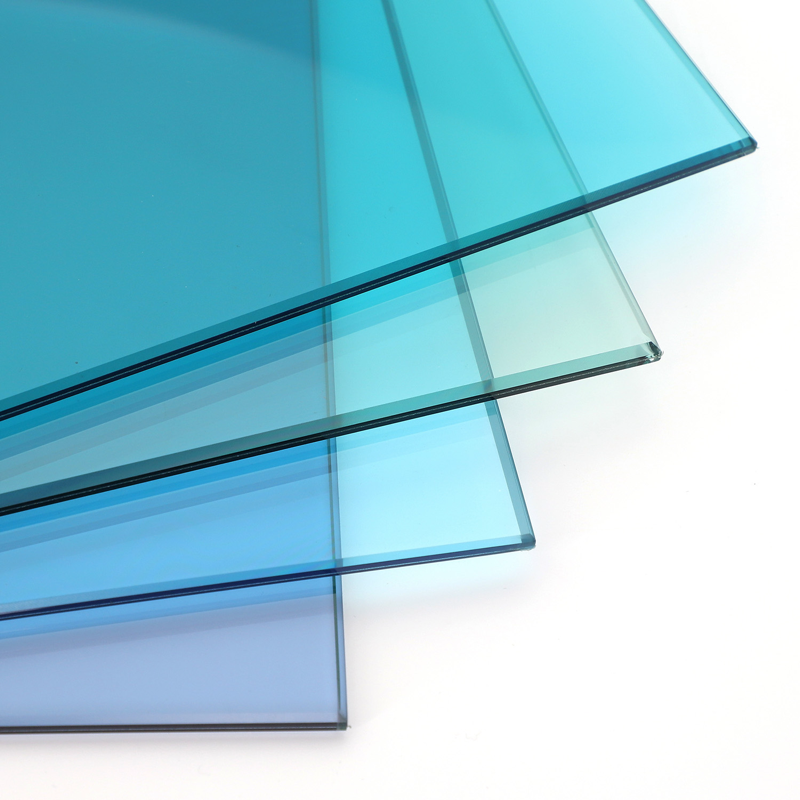
Manufacturers use two distinct technical pathways to achieve durable coloration. Each approach offers specific optical properties and aesthetic advantages. Understanding these pathways helps you select the perfect material for your specific facade or interior project.
Pathway 1: Body-Tinted Substrates (Ions-Tinting Technology)
The first method modifies the actual glass chemistry. During the float glass manufacturing process, technicians introduce specific metal oxides into the molten mixture. Cobalt creates rich blues. Iron produces vibrant greens. Selenium yields elegant bronze tones.
Pros: This color becomes a permanent, structural part of the glass matrix. It remains completely scratch-proof. You get excellent structural stability. The aesthetic appears consistent regardless of the viewing angle.
Cons: Because it relies on massive melting campaigns, batch-to-batch color variation remains a distinct risk. Furthermore, body-tinted glass exhibits exceptionally high heat retention. You must manage thermal stress carefully to avoid spontaneous breakage.
Pathway 2: Colored Interlayers (Tinted PVB/EVA)
The second method uses standard clear or low-iron glass panes. Manufacturers laminate these clear panes using pre-dyed polymeric films. Technicians can stack multiple colored layers to achieve precise custom opacities and highly unique hues.
Pros: You gain highly customizable color options. These dyed films offer exceptional UV blocking capabilities, often exceeding 99.5%. You also retain tighter control over visible light distortion compared to heavy glass tints.
Cons: Exposed edges pose a slight vulnerability. If you use colored films in exterior applications, you must seal the edges properly. Poor sealing invites moisture ingress, leading to unsightly delamination over time.
We recommend a clear decision framework for specifiers. Use Pathway 1 for heavy commercial facades. These environments demand extreme weather durability and uniform coloration across large elevations. Conversely, use Pathway 2 for interior partitions, frameless balustrades, or highly customized architectural branding elements. For any demanding application, choosing a reliable colored safety glass guarantees both visual appeal and structural peace of mind.
Evaluating facade performance requires looking past the color. You must balance light transmission with heat rejection. Achieving this balance requires understanding several critical technical metrics.
Visible Light Transmittance (VLT) and Solar Heat Gain Coefficient (SHGC, or g-value) share an inherent inverse relationship. VLT measures how much natural daylight enters the room. SHGC measures how much total solar heat passes through the glass. Lowering the g-value means you block more heat. Unfortunately, this typically lowers the VLT, resulting in darker interiors. A well-engineered facade seeks harmony. For moderate climate zones, specifiers often aim for a balanced 60/40 ratio. You want roughly 60% light transmission coupled with a 0.40 heat gain coefficient.
To measure absolute efficiency, the industry relies on the Light-to-Solar Gain Ratio (LSG). We calculate this metric by dividing the VLT by the SHGC. A higher LSG number indicates a smarter glass panel. It transmits ample daylight while effectively blocking the heat penalty. How do you maximize LSG? You combine a tinted outer substrate with an advanced Low-E coating. Industry standards dictate placing this Low-E coating on Surface 2 of an Insulated Glass Unit. This configuration delivers massive energy savings for large commercial buildings.
Acoustic insulation represents another vital performance metric. The polymeric core inside laminated glass serves as a powerful sound dampener. It aggressively breaks down low-frequency urban noise. This secondary benefit proves crucial for commercial spaces located near busy traffic arteries or airports. We measure this capability using OITC (Outside-Inside Transmission Class) and STC (Sound Transmission Class) ratings.
Performance Metric | Definition | Ideal Target (Commercial) |
|---|---|---|
Visible Light Transmittance (VLT) | Percentage of visible daylight passing through the glass. | 40% to 65% (depending on glare sensitivity) |
Solar Heat Gain Coefficient (SHGC) | Fraction of solar radiation admitted through the window. | Under 0.40 (lower is better for cooling) |
Light-to-Solar Gain Ratio (LSG) | VLT divided by SHGC. Measures spectral selectivity. | 1.25 or higher |
Sound Transmission Class (STC) | Measurement of acoustic attenuation across higher frequencies. | 35 to 40+ (for urban commercial spaces) |
While tinted substrates look beautiful, they introduce significant physical risks. You must respect the physics of thermal shock. Because tinted materials absorb large amounts of solar energy, they heat up rapidly under direct sunlight. However, building frames typically shadow the edges of the glass panel. The center of the glass becomes incredibly hot and expands. The shaded edges remain cool and resist this expansion. This intense temperature differential creates immense tensile stress along the glass edge.
Certain architectural conditions heavily multiply this thermal stress risk. You must evaluate your building's orientation and internal layout carefully. Watch out for these high-risk scenarios:
South-Facing Large-Span Facades: These elevations endure the longest, most intense periods of direct solar radiation.
Deep Frame Shadowing: Thick mullions or deep architectural recesses keep large portions of the glass edge artificially cool, maximizing the temperature gradient.
Improper Interior Blinds: Placing dark window treatments too close to the indoor glass surface traps radiant heat. The heat bounces back into the glass, severely compounding center-glass temperatures.
Engineering the solution is straightforward but non-negotiable. Using standard annealed glass for high-absorption facade panels is completely unacceptable. The tensile strength of annealed glass simply cannot handle extreme temperature differentials. You must specify rigorous heat treatments. The tinted panes must undergo tempering or heat-strengthening prior to the lamination process. Tempering increases the edge strength of the glass four to five times. This vital step effectively eliminates the risk of spontaneous thermal fractures, ensuring decades of safe performance.
Architectural color selection goes beyond mere aesthetics. The color profile you choose directly impacts human comfort and energy consumption. Grey and bronze substrates naturally provide heavy glare reduction. They create a moody, controlled indoor environment. Architects frequently specify these darker hues for luxury hospitality venues, high-end retail storefronts, and premium automotive showrooms. They excel at reducing eye strain in sun-drenched regions.
Conversely, green and blue substrates offer a different functional reality. They generally provide higher VLT percentages. They maximize natural daylight penetration while still controlling raw solar heat. Corporate office campuses heavily favor these lighter tints. They boost employee productivity through improved daylighting. Additionally, they help projects secure prestigious green building certifications, such as LEED or BREEAM.
Privacy realities also require clear communication with clients. High-quality tinted laminated glass provides dual-directional balanced privacy. It darkens the view slightly from both sides. This differs completely from reflective glass coatings. Reflective glass acts like a mirror during the day, providing excellent single-directional privacy. However, when night falls and occupants turn on interior lights, the mirror effect flips. The glass becomes completely transparent from the outside. Tinted substrates do not suffer from this dramatic nighttime reversal.
Finally, specifiers must mandate strict safety compliance. Visual appeal means nothing without structural integrity. Ensure your shortlisted manufacturer complies fully with regional impact safety standards. In the United States, look for ANSI Z97.1 certification. European projects demand EN 14449 compliance. For installations in Oceania, AS/NZS 2208 serves as the baseline requirement. Requesting these certificates during the bidding phase prevents costly compliance failures later.
Tinted architectural glass fundamentally moves a project beyond standard fenestration. It actively contributes to significant HVAC load reductions, enhances facade aesthetics, and ensures rigorous structural integrity. By carefully balancing VLT against SHGC, and managing thermal stress through proper heat-strengthening, architects can deliver highly efficient, visually striking buildings.
Before moving to procurement, specifiers should follow several concrete next steps. First, always mandate a physical mockup sample to verify batch color consistency under natural lighting. Second, request complete spectral data sheets that verify VLT, SHGC, and U-values calculated specifically in your intended IGU format. Finally, demand that your fabricator runs localized thermal stress analyses based on your exact building orientation and framing shadows. Taking these steps guarantees long-term performance and unmatched safety.
A: Body-tinted glass never fades because the color comes from metal oxides permanently bonded to the glass matrix. High-quality colored PVB interlayers are heavily UV-stabilized. They generally show negligible fading over a standard 10 to 20-year commercial warranty period.
A: The tinted component is typically positioned as the outboard (exterior) pane. This placement allows it to absorb solar energy before that heat enters the insulated cavity. It maximizes overall cooling efficiency and prevents heat from radiating into the building interior.
A: Factory-produced tinted glass offers vastly superior optical clarity. It carries zero risk of film bubbling, peeling, or scratching over time. Furthermore, it avoids the severe thermal fracture risks frequently caused by applying dark aftermarket films to standard annealed windows.


