Views: 0 Author: Site Editor Publish Time: 2026-05-15 Origin: Site


Think of modern commercial building facades. They look striking but face massive heat challenges daily. Architects must balance facade consistency and visual appeal with strict energy codes. They also need to reduce HVAC loads and prioritize occupant comfort. How do we achieve this perfect balance? Enter the concept of the functional "thermal sponge." Rather than acting solely as a decorative design element, these specialized windows actively absorb solar radiation. True performance relies on body-tinting. Manufacturers embed metallic oxides directly during the glass-making process. This chemical integration creates a permanent, maintenance-free shield. It remains entirely distinct from retrofitted, peel-prone surface films. In this guide, you will learn the mechanical differences between popular hues. We will explore core evaluation metrics and provide a practical framework to select the ideal exterior glazing for your next project.
Permanent Integration: Body-tinted float glass uses ions (iron, cobalt, selenium) baked into the glass, ensuring the color and UV protection never fade or scratch.
The Efficiency Trade-off: Darker tints aggressively lower the Solar Heat Gain Coefficient (SHGC) but significantly reduce Visible Light Transmission (VLT), requiring a calculated balance.
Thermal Stress Risk: Because colored glass absorbs (rather than reflects) solar energy, darker tints carry a high risk of thermal stress fractures and typically require heat-strengthening or tempering.
Code Compliance: Stand-alone tinted glass rarely meets modern strict energy codes; it must be paired with Low-E coatings in an Insulated Glass Unit (IGU) for optimal performance.
To understand how these windows perform, we must look at the "thermal sponge" effect. Standard clear windows allow solar heat to pass directly into a room. Conversely, a body-tinted pane actively absorbs this radiation. The metallic oxides baked into the material capture the sun's energy before it penetrates the interior space. Once absorbed, the pane radiates most of this trapped heat back outward into the exterior air. This mechanism can reduce peak HVAC cooling loads by up to 30 percent in exposed commercial spaces.
When you evaluate solar control glass, you must navigate three non-negotiable performance metrics. Industry professionals use these numbers to verify architectural compliance.
Visible Light Transmission (VLT): This percentage dictates how much natural daylight enters the room. High VLT means a brighter interior. Low VLT provides maximum glare reduction and deeper privacy.
Solar Heat Gain Coefficient (SHGC): This fraction measures the total amount of solar heat blocked by the window. A lower SHGC indicates better heat-blocking capability. You want low SHGC numbers in hot, sunny climates.
Light-to-Solar Gain Ratio (LSG): We calculate this by dividing VLT by SHGC. It serves as the ultimate measure of spectral selectivity. A higher LSG means the pane transmits plenty of light while still blocking significant heat.
Many property owners confuse body-tinting with aftermarket surface films. We must clarify the manufacturing superiority of true tinted float glass. Technicians infuse ions directly into the molten silica mixture. The color becomes an inseparable part of the material. It is completely fade-proof and weather-resistant. This makes it highly scalable for massive commercial facades where maintenance access remains limited. Surface films, alternatively, degrade under intense UV exposure and often peel around the edges over time.
Architects frequently lean on classic neutral tones to anchor a building's design. These shades manage intense sunlight while offering highly predictable aesthetic results.
The visual profile of bronze glass stands out for its sophisticated warmth. It provides a subtle, amber-like interior glow. On the exterior, it coordinates seamlessly with traditional brick and stone masonry facades. You will often see it used in retrofits of historic buildings or mid-century modern updates.
Regarding its performance baseline, bronze offers moderate VLT. It allows enough daylight to illuminate a lobby while blocking significant amounts of damaging UV radiation. It serves as the best option when you require a rich, refined exterior presence without creating harsh, mirror-like reflections. It effectively grounds the building in its surrounding environment.
We consider grey glass the ultimate neutral choice. It acts like high-quality sunglasses for your building. It reduces incoming glare significantly, yet it never distorts the natural colors of the outside environment. Occupants looking out will see blue skies and green trees exactly as they appear in reality.
You can leverage a wide grey spectrum for different zones of your project. Manufacturers offer ultra-light grey shades optimized for high daylighting on north-facing elevations. Conversely, they produce super-dark grey options. These dark panes provide excellent ground-floor privacy and deliver maximum glare control for sensitive office environments.
Specifiers must note a typical trade-off. As the thickness increases, the VLT and SHGC drop in a linear, highly predictable manner. This reliable scaling makes it a favorite baseline for engineers.
Typical Performance Shift by Thickness (Grey & Bronze Neutral Tints) | |||
Glass Color & Thickness | Visible Light Transmission (VLT) | Solar Heat Gain Coefficient (SHGC) | Primary Application |
|---|---|---|---|
Standard Light Grey (6mm) | ~45% | 0.58 | Moderate glare reduction, upper floors. |
Standard Bronze (6mm) | ~47% | 0.60 | Warm aesthetic, masonry pairings. |
Super-Dark Grey (12mm) | < 10% | 0.35 | High privacy, ground floors, intense sun exposure. |
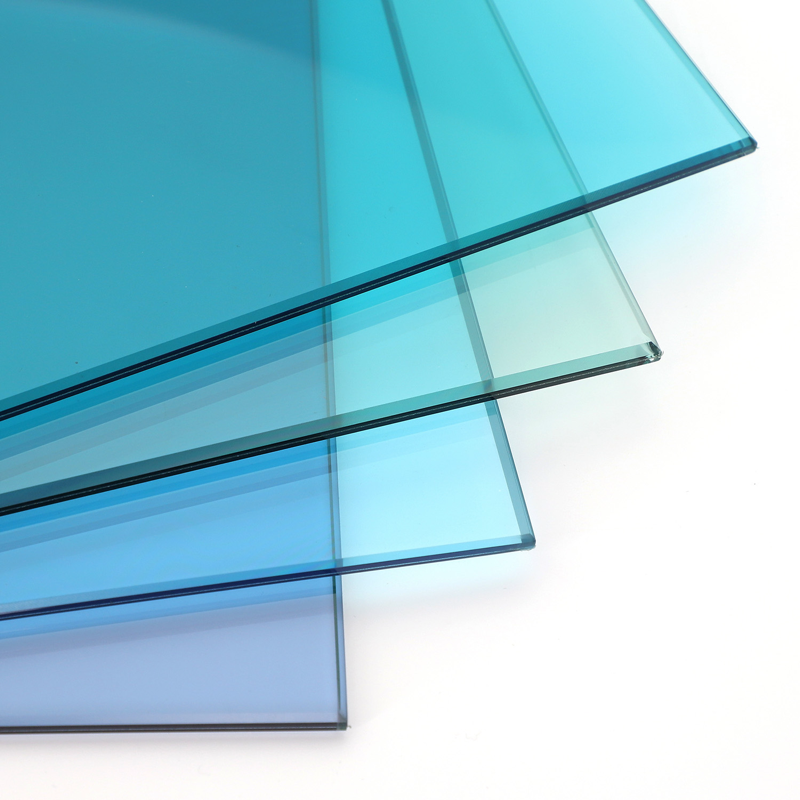
When designers want to push visual boundaries while maximizing energy efficiency, they often turn to vibrant tinted glass colors. Blue and green options deliver striking curb appeal alongside exceptional thermal selectivity.
The visual profile of a green-tinted facade naturally connects commercial interiors with the outside world. Architects heavily favor this shade in LEED-certified buildings. It blends beautifully when situated near parks, campuses, or dense natural surroundings.
We often refer to green shades as the "Efficiency King" among standard tints. Manufacturers use iron-based chemistry to create the hue. This specific iron content makes the material naturally spectrally selective. It allows an exceptionally high percentage of visible light to pass through. Simultaneously, it aggressively blocks near-infrared heat. If you need bright workspaces without overwhelming your air conditioning systems, this color profile offers an unparalleled baseline performance.
If you want to project a modern, bold, and tech-forward facade, blue options deliver instantly. The visual profile ranges dramatically. You can source light sky-blue variants for a subtle aerial look. Alternatively, you can select deep ocean and nautical tones for a heavy, striking presence against city skylines.
Deep blue tints prove highly effective in tropical or high-glare environments. Because the pigment density is so high, it absorbs massive amounts of incoming solar energy. This aggressive absorption protects valuable interior assets from rapid UV fading. In fact, premium dark blue panes can block up to 99 percent of damaging ultraviolet rays. This protects lobby furniture, retail displays, and expensive interior artwork.
Selecting the right specification involves more than matching a color to a masonry sample. Buyers and architects must evaluate their choices through a rigorous, multi-layered approach. We developed a 4-lens sourcing cheat sheet to guide you toward the perfect colored glass specification.
The Climate Lens: Your geographic location dictates your starting point. Hot, sun-drenched climates demand deep, dark tints. You need a low SHGC to drastically cut summer cooling costs. Conversely, colder northern climates may favor lighter green or clear tints. These allow passive solar heating to warm the building during frigid winter months.
The Privacy & Glare Lens: Consider the elevation and orientation of the windows. High-altitude floors generally benefit from high VLT options, like light blue or green. This preserves expansive city views for occupants. However, ground floors or highly exposed east and west elevations face brutal morning and afternoon sun. These zones require low VLT options, like dark grey or bronze, to ensure proper glare reduction.
The Safety & Risk Lens: You must address implementation realities early in the design phase. Dark glass, specifically panes with a VLT under 40 percent, acts as a massive thermal heat sink. It absorbs immense solar energy. The center of the pane heats up rapidly, while the edges hidden inside the aluminum frame remain cool. This temperature differential creates severe stress. Therefore, you must specify tempering or heat-strengthening for dark tints to prevent dangerous thermal stress breakage.
The Aesthetic Lens: An entire facade relies on visual consistency. You must ensure the vision areas match the opaque spandrel areas perfectly. A beautifully tinted vision pane can look terrible if it clashes with the spandrel panels hiding the floor slabs. Always evaluate mock-ups to guarantee envelope consistency.
We must address a critical reality in modern construction. Relying on color alone will not meet today's rigorous building standards. You need a compound approach. While the body-tint handles glare and UV radiation, you must combine it with Low-E (Low-Emissivity) coatings. You achieve ultimate thermal performance by sealing both elements inside an Insulated Glass Unit (IGU).
This compound effect creates a massive performance jump. A stand-alone tinted pane might have a basic U-Value around 0.45. This number indicates a moderate amount of heat transfer. However, when you pair that same colored pane on the exterior with a high-performance Low-E coating on the inner pane of an IGU, the data leaps forward. The U-Value drops drastically to approximately 0.26 or even lower. The Low-E coating reflects interior heat back inside during winter, while the tint absorbs exterior heat during summer.
Sometimes, traditional body-tinting does not fit project constraints. We briefly mention alternative approaches for complex scenarios. You can achieve vibrant exterior colors by using colored PVB laminated glass. Installers sandwich a tinted plastic interlayer between two sheets of clear glass. This secondary option shines when a project requires extreme blast resistance, hurricane impact ratings, or advanced acoustic control alongside solar management.
Choosing between bronze, grey, blue, or green is never a purely aesthetic decision. It functions as a simultaneous choice regarding your building's emotional tone and its baseline HVAC load engineering. The right specification enhances occupant comfort while sharply decreasing energy demands.
To move forward successfully, specifiers should take immediate action. First, request physical glass samples directly from the manufacturer. You must view these samples outside, under actual site lighting conditions, as showroom lighting alters perception. Next, demand complete, NFRC-certified data sheets for your specific thickness and tint combinations. Only finalize your bulk procurement once the mechanical data aligns perfectly with your local energy codes and architectural vision.
A: Grey tints are spectrally neutral. They reduce brightness without distorting the natural colors of the outside environment, maintaining true-color clarity. Bronze, however, shifts the light spectrum. It adds a warm, slight sepia tone to the interior view, which designers often use to create a cozier, inviting atmosphere.
A: Yes, it carries a high risk of thermal stress fractures. Because dark colors actively absorb solar heat rather than reflecting it, the center of the pane becomes much hotter than the framed edges. This temperature difference causes expansion stress. Dark panes typically require heat-strengthening or tempering to prevent cracking.
A: No. True solar control options utilize a body-tinted float glass process. Manufacturers bake metallic oxides directly into the molten material. This creates a permanent, fade-proof color that runs all the way through the thickness of the pane. It will never peel, bubble, or scratch off like aftermarket surface films.
A: Green generally stands out as the most naturally energy-efficient standard option. Thanks to its iron-based composition, it offers high spectral selectivity. It allows excellent visible light transmission for daylighting while aggressively blocking near-infrared heat, resulting in an exceptionally high light-to-solar gain ratio.


