Views: 0 Author: Site Editor Publish Time: 2026-03-10 Origin: Site


If you manage a building project, design a façade, or specify windows for a noise-sensitive space, you’ve likely heard the term Acoustic Laminated Glass—and you’ve probably also seen how confusing the topic can get. Some people expect a single product to “block all noise,” while others are unsure how it differs from normal laminated glass or double glazing. In real buildings, noise control is rarely solved by one element alone. But when the goal is to reduce outside sound while keeping daylight, transparency, and modern aesthetics, acoustic laminated glass becomes one of the most practical tools available. It is widely used in residential towers, hotels, hospitals, schools, office buildings, airports, and roadside developments—anywhere sound comfort affects daily experience.
From our manufacturing and supply perspective, the value of acoustic laminated glass is not marketing language—it is physics applied to construction. It works by combining multiple layers of glass with an interlayer that helps damp vibrations and reduce the transmission of sound energy through the pane. The result is a glazing solution that can help make interiors feel calmer, more private, and more comfortable, especially in environments with traffic, aircraft, rail lines, or high-density urban activity. At Rider Glass Company Limited, we support customers who need clear, reliable specifications and real-world product matching.
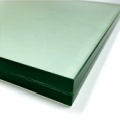
Acoustic laminated glass is a type of laminated glass engineered to reduce noise transmission. Standard laminated glass is made by bonding two or more glass sheets together with a plastic interlayer. Acoustic laminated glass uses a specially designed interlayer (or interlayer system) that improves sound damping compared with a basic laminate.
In a simple description:
Glass layers provide mass and stiffness
The interlayer bonds the layers and adds damping
The combination reduces the energy of sound passing through
This approach is especially useful because it allows noise reduction while keeping the glazing transparent and structurally stable.
To understand how it works, it helps to know what sound does to glass.
When sound hits a window, it creates pressure waves that make the glass vibrate. That vibration transfers to the other side of the glass and becomes airborne sound again. Acoustic laminated glass targets this vibration transfer.
Acoustic laminated glass reduces noise mainly by:
Adding mass (through multiple glass layers)
Damping vibration (through the interlayer that absorbs vibration energy)
Reducing resonance effects (the laminate behaves differently than a single pane)
When the interlayer is designed for acoustic performance, it helps the glass vibrate less efficiently in key frequency ranges—especially those that strongly affect perceived noise like traffic and urban sound.
Many buyers ask: “Isn’t all laminated glass acoustic?” The answer is that all laminated glass has some damping benefit compared with a single pane, but acoustic laminated glass is optimized for stronger noise reduction.
Here’s a practical comparison:
Glass Type | What It’s Designed For | Noise Control Performance |
Single glass | Basic glazing, low cost | Limited sound reduction |
Standard laminated glass | Safety, security, impact behavior | Moderate improvement vs single pane |
Acoustic laminated glass | Noise reduction + safety laminate structure | Stronger damping and more targeted performance |
For projects where sound comfort is a key requirement, acoustic laminated glass gives more predictable results.
Not all noise behaves the same. Sound frequency matters.
High-frequency sound (voices, some mechanical noise) is generally easier to reduce with mass and airtight sealing.
Low-frequency sound (trucks, bass, aircraft rumble) is harder to block because it carries more energy and creates stronger panel vibration.
Acoustic laminated glass often helps with mid-frequency and some lower-mid sound ranges, but true low-frequency reduction typically requires a system-level approach: thicker glass, better air gaps, and strong frame sealing.
In real projects, acoustic laminated glass is usually specified by a build-up format such as:
6.38 mm laminate (3 mm + interlayer + 3 mm)
8.76 mm laminate (4 mm + interlayer + 4 mm)
10.76 mm laminate (5 mm + interlayer + 5 mm)
The “.38” or “.76” often indicates interlayer thickness (commonly 0.38 mm or 0.76 mm total interlayer thickness, depending on the laminate structure). Acoustic interlayers may be used at similar thicknesses but with a different material formulation.
Acoustic laminated glass performance is not determined by one factor only. The results depend on a combination of glass build-up and installation quality.
Generally, heavier glazing can reduce sound transmission more effectively than lighter glazing.
The acoustic interlayer is the damping element. Different interlayers can produce different sound reduction results, especially in the mid-frequency range.
Acoustic laminated glass is often used as part of a double-glazed unit. In that case, the air gap and the combination of panes strongly influence performance.
Using different thicknesses on each side (asymmetry) often improves acoustic performance because it reduces resonance coincidence between panes.
Even the best acoustic glass can underperform if the frame allows air leakage. Sound often “leaks” through gaps, not through the glass itself.
Factor | Why It Matters |
Glass thickness | Adds mass and reduces vibration |
Acoustic interlayer | Dampens vibration and reduces transmission |
Air gap in IGU | Adds an extra acoustic barrier |
Asymmetrical panes | Helps reduce resonance coincidence |
Frame sealing | Prevents sound leakage paths |
Acoustic laminated glass is used wherever noise control improves comfort and usability:
apartments near highways or rail lines
hotels where guest comfort depends on quiet interiors
offices and meeting rooms where speech privacy matters
hospitals and clinics where calm environments are important
schools and classrooms in urban areas
airports and transport hubs
commercial buildings in dense traffic zones
In many of these projects, acoustic laminated glass is selected not just for comfort, but also for higher perceived building quality.
The best approach is to start from the noise source and project target.
Traffic, aircraft, rail, nearby construction, or crowd noise—each behaves differently.
For stronger sound control, acoustic laminated glass is often most effective when used in a double-glazed configuration.
If the project is noise-sensitive, asymmetrical glass thickness often improves results without changing the appearance.
If the window system has weak sealing, increasing glass performance may not solve the full problem.
Ask for clear build-up, interlayer type, and system configuration.
Environment | Common Noise Challenge | Practical Direction |
Urban residential | Mixed traffic noise | Acoustic laminated glass in IGU, focus on sealing |
Highway nearby | Strong low-frequency noise | Thicker laminate + larger air gap + asymmetry |
Airport zone | Wide frequency range | High-spec IGU + acoustic laminate + strong framing |
Office meeting rooms | Speech privacy | Acoustic laminate + good seals, consider internal partitions |
Schools | External traffic + interior noise | Balanced acoustic glazing + durable framing |
These are direction notes—final selection should match building requirements and system design.
Acoustic laminated glass works best when the full window system supports it. Key practices include:
ensure airtight sealing around the frame
avoid gaps around glazing beads and gaskets
confirm correct setting blocks and proper support
maintain consistent installation quality across units
inspect for air leaks after installation
In sound control, small gaps can create big performance loss.
Acoustic Laminated Glass works by combining the mass of glass with the damping behavior of a specialized interlayer, reducing vibration transfer and lowering sound transmission through the pane. It is a practical solution for projects where daylight and transparency are needed but noise comfort is also a priority. The best results come when acoustic laminated glass is matched to the noise environment, designed with appropriate thickness and configuration (often in an IGU), and installed with strong frame sealing.
At Rider Glass Company Limited, we help customers select acoustic laminated glass solutions based on real project conditions—not assumptions. If you are planning a noise-control glazing upgrade or specifying glass for a new development, you are welcome to learn more through Rider Glass Company Limited and contact our team for product information and configuration support.
It reduces noise by damping glass vibration through a specialized interlayer bonded between glass sheets, lowering sound energy transmission.
In many projects, yes. Standard laminated glass provides some damping, but acoustic laminated glass is engineered for stronger sound reduction performance.
Often yes. Using acoustic laminated glass as part of an insulating glass unit adds an air gap and additional pane effects that can improve overall sound control.
Frame design and airtight sealing are critical. Even high-performance acoustic glass can underperform if the window system has air leakage paths.


