Views: 0 Author: Site Editor Publish Time: 2026-06-21 Origin: Site


High-rise and commercial facade failures carry catastrophic structural and liability risks. Glazing specification remains one of the highest-stakes decisions in modern building design. A single pane failure high above a busy street triggers immediate danger. It also brings severe legal consequences. Architects constantly push for larger, uninterrupted transparent spans. They want maximum natural light and seamless exterior aesthetics. Engineering realities, however, demand rigorous adherence to structural integrity. We must manage continuous wind load resistance and intense thermal stress.
Successfully specifying tempered glass for building facades requires moving beyond basic marketing claims. You must strictly evaluate normative safety standards. You also need to verify realistic load-bearing capacities. Implementing documented risk mitigation strategies is equally critical. The margin for error is razor-thin. Facade engineers face immense pressure to balance visual lightness against brutal environmental forces. We will explore how treating glass as an active structural component changes the design paradigm. You will learn the exact normative codes to follow. We will cover stress modeling and ways to mitigate spontaneous breakage risks before panels ever leave the factory.
Tempered glazing offers 4-5 times the mechanical strength of standard annealed glass, making it the baseline for high-stress facade zones.
Compliance with core international standards (ASTM C1048, EN 12150) is non-negotiable for proving impact resistance and post-breakage safety.
Accurate stress modeling must account for continuous wind loads, dead weight, and localized thermal gradients to prevent premature structural fatigue.
Spontaneous breakage due to Nickel Sulfide (NiS) inclusions remains a critical risk; mandatory Heat Soak Testing (HST) or alternative specification of a heat-strengthened glass panel must be evaluated per project.
Architects envision massive, continuous spans of glass. They want buildings to look light and open. However, glass materials face harsh physical limitations under severe environmental stress. We must balance this artistic vision against strict engineering reality. Glass acts as the primary protective barrier against wind, rain, and rapid temperature shifts.
Untreated annealed glass is structurally disqualified for high-rise exteriors. It shatters into large, lethal shards upon impact. Local and international building codes legally ban its use in overhead or high-impact exterior zones. High-altitude environments demand vastly superior mechanical strength. We need materials capable of withstanding flying debris and intense air pressure changes.
This makes the specification of tempered safety glass essential. The thermal tempering process induces high surface compression. It locks the inner core of the glass in tension. Tempered panels achieve surface compression levels exceeding 10,000 psi. This gives them four to five times the mechanical strength of raw annealed glass. In contrast, a standard heat-strengthened option only reaches 3,500 to 7,500 psi. Heat-strengthened units are stronger than untreated glass but lack full safety glazing classification.
These properties fundamentally redefine the role of glazing in construction. We no longer view architectural facade glass as a simple environmental screen. It becomes an active structural component. It absorbs wind sheer forces, transfers heavy loads to the aluminum framing, and helps stabilize the building envelope. Treating glass as a load-bearing material requires precise mathematical calculations. It also demands a deep understanding of its physical breaking points.
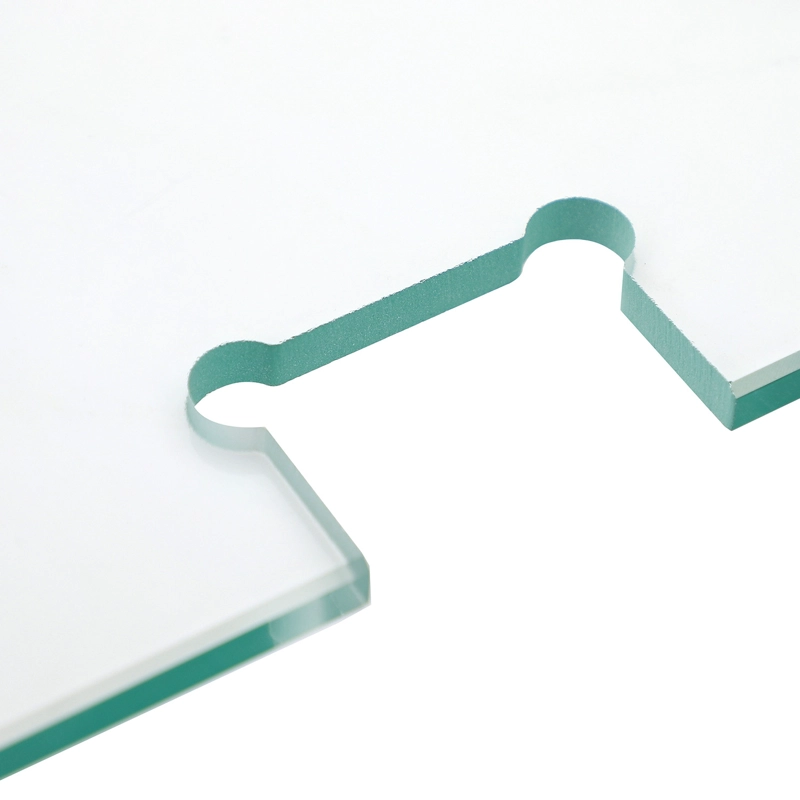
Regulatory codes strictly dictate facade glass selection. Jurisdictions vary, but all mandate proven safety performance. You must map these requirements early in the design phase. International Building Code (IBC) guidelines serve as a universal baseline in many regions. They point directly to specific material testing frameworks.
Two core families of standards govern the specification process. North American projects rely heavily on ASTM standards. ASTM C1048 defines the specific manufacturing requirements for heat-treated flat glass. ASTM E1300 provides the standard practice for determining load resistance. European projects follow EN standards closely. EN 12150 dictates thermal toughening parameters. EN 14179 details the precise fragmentation requirements for safety glass validation.
You must audit manufacturer testing data carefully. Do not accept general marketing brochures as proof of compliance. Request documented fragmentation tests. EN 12150 requires a specific particle count during fragmentation testing. A 50mm by 50mm square must yield a minimum number of fragments. This guarantees the glass shatters into blunt pebbles rather than dagger-like shards. You should also review pendulum impact test results. This ensures your building safety glazing matches production reality. Third-party independent certifications offer the most reliable validation.
Fire resistance adds another layer of complexity. Standard tempered panels offer very limited fire protection. High temperatures cause them to lose surface compression rapidly. They will shatter quickly during a sustained blaze. Fire-rated zones require specialized laminated combinations or intumescent interlayers. You must assess tempering limitations in these critical areas to maintain building compartmentation.
We must translate raw material strength into active load-bearing capabilities. A strong panel means nothing if the system design fails. Engineers model structural stresses to ensure long-term fatigue resistance. You have to account for multiple dynamic forces acting on the facade simultaneously.
Wind loads present the most obvious challenge. High-altitude exterior panels face immense positive and negative pressures. You must calculate accurate deflection limits. Industry standards typically limit center-of-glass deflection to L/175. Exceeding this limit jeopardizes edge seals. It can also cause the lite to pull out of its aluminum framing. We calculate these parameters using finite element analysis (FEA).
Dead loads also exert constant stress on the system. Panels must support their own physical weight. This is critical in point-supported or structural silicone glazing (SSG) systems. Gravity pulls down on massive panels continuously. The supporting hardware and drilled glass holes face concentrated stress points.
Thermal loads are often underestimated in preliminary designs. Solar heat gain warms the center of the panel rapidly. Shading coefficients and interior HVAC systems cool the edges simultaneously. This temperature differential generates immense thermal stress. It can easily cause spontaneous breakage if left unmanaged.
Common Facade Glazing Structural Stresses | ||
Stress Type | Primary Cause | Engineering Mitigation Strategy |
|---|---|---|
Wind Load | Atmospheric pressure, altitude, severe storms | Increase pane thickness, adjust aspect ratios |
Dead Load | Gravity acting on total panel weight | Robust SSG application, engineered point-supports |
Thermal Load | Solar gain vs. edge shading or HVAC cooling | Thermal stress analysis, strict heat treatment |
We must transparently acknowledge specific design limits. A single load-bearing tempered panel has physical boundaries. Extreme wind zones or blast-resistant security requirements often exceed its standalone capacity. In these demanding scenarios, you must switch to multi-ply laminated structural glass. Laminated options use rigid ionoplast interlayers to provide crucial post-breakage retention.
Even the most precise engineering models encounter post-installation failures. Facade engineers face two extremely common implementation realities. These are spontaneous breakage and visual distortion. Both cause massive financial headaches for property developers.
The Nickel Sulfide (NiS) threat remains a critical industry issue. Microscopic impurities occasionally survive the raw glass melting process. During thermal tempering, these NiS stones become trapped in an unstable state. Over time, external solar heat causes them to expand. This expansion creates massive internal pressure. It triggers unprovoked shattering months or even years after initial installation.
You must mitigate this risk proactively. We strongly recommend specifying Heat Soak Testing (HST) for all critical facades. HST places finished panels in a specialized factory oven. It artificially accelerates the NiS expansion. Defective panels break in the factory safely. They do not shatter on your finished building and endanger pedestrians below.
Sometimes, the risk of spontaneous breakage outweighs the need for maximum structural strength. Overhead canopies and spandrel zones often fall into this category. Here, we evaluate alternative fallbacks. You can justify the switch to a heat-strengthened glass panel. Heat-strengthened glass rarely suffers from NiS inclusions due to its lower cooling rate. More importantly, it stays intact in the frame upon cracking. It breaks into larger pieces that interlock safely.
Visual quality control is another significant hurdle. The tempering process inherently introduces optical anomalies. As glass moves over ceramic furnace rollers, it develops slight surface variations.
Roller Wave Distortion: Horizontal ripples visible from acute viewing angles.
Edge Dip: Minor bending at the leading and trailing edges of the panel.
Anisotropy: Iridescent spots or "leopard spots" visible under polarized daylight.
New scanning technologies quantify anisotropy across the entire pane. They measure retardation values in nanometers. You must establish acceptable visual tolerances before manufacturing begins. Always view full-scale mockups under realistic site lighting conditions.
Selecting the right commercial glass fabricator dictates project success. You need a rigorous qualification process. Basic equipment capabilities are not enough for high-stakes modern facades. Use actionable criteria to shortlist reliable vendors.
A thorough audit checklist helps prevent catastrophic procurement disasters. Consider the following key evaluation points during the shortlisting phase:
Continuous Standard Compliance: Demand documented proof of recent third-party audits. Check for consistent ASTM and EN standard adherence across their entire product line.
Furnace Capabilities: Verify maximum oversized panel dimensions. Confirm their thickness tolerances match your exact structural models.
In-House HST Documentation: Ensure they perform Heat Soak Testing on-site. Review their documentation and barcode tracking procedures for individual panels.
Warranty Structures: Examine warranties covering spontaneous breakage and optical clarity. Avoid fabricators who use vague language regarding replacement obligations.
Fabricators must demonstrate absolute transparency. Ask for their internal quality control manuals. Review their historical factory rejection rates. A reliable vendor actively partners with facade engineers. They point out design flaws before cutting expensive glass. They help optimize panel sizes for better manufacturing yield and structural safety.
Tempered glass remains the structural cornerstone of modern facades. Its immense strength allows architects to realize ambitious, transparent building designs. However, its inherent physical risks must be actively engineered out. You achieve this through rigorous specification, advanced stress modeling, and strict quality control.
Your final procurement decisions must rely on documented testing data. Base them strictly on adherence to ASTM and EN normative standards. Always demand verified stress models for continuous wind and thermal loads. Prioritize a fabricator's transparency regarding Heat Soak Testing capabilities and acceptable distortion tolerances.
Do not compromise on baseline safety testing. Treat the glass as a critical structural asset rather than a simple window. By applying these strict engineering principles, you protect both the physical building envelope and its daily occupants.
A: Minimum thickness varies based on wind load modeling and local building codes. Facade engineers typically specify starting thicknesses of 6mm for outer lites. Extreme altitudes, corner zones, and larger panel spans frequently necessitate 8mm or 10mm options to prevent excessive center-of-glass deflection.
A: No. You cannot modify tempered glass once it undergoes the heating and rapid cooling process. All cutting, drilling, and edge-working must occur prior to tempering. Attempting to drill or cut a finished panel will immediately shatter the entire lite into thousands of small pieces.
A: Heat Soak Testing requires placing panels in an oven for several hours. This inherently adds production steps and extends lead times. You should factor this into your construction schedule early. We position HST as a necessary insurance policy against the catastrophic schedule disruptions caused by post-installation replacements.


