Views: 0 Author: Site Editor Publish Time: 2026-05-20 Origin: Site


Balancing high light transmittance with privacy often pushes architects into a difficult corner. Flat, uninspired frosted treatments look dull. They frequently destroy the open, airy feel modern clients demand. You need a better material to solve this tension. Enter patterned glass, also widely recognized as textured glass in the architectural industry. It provides both a structural and aesthetic solution.
The unique manufacturing process creates a captivating "beauty of vagueness" through perfectly controlled light diffusion. This transforms ordinary room partitions into luminous, dynamic design features. The purpose of this guide is to help you navigate these material options confidently.
Architects, interior designers, and procurement managers will discover a comprehensive technical and aesthetic comparison of the four primary industry patterns—Moru, Diamond, Flora, and Nashiji. By understanding their distinct properties, you can facilitate highly accurate specifications tailored exactly to your project needs.
Moru glass leads modern minimalist designs with vertical fluting, offering medium privacy and high light transmission.
Nashiji glass provides superior obscure privacy through a granular, double-roll cast texture, ideal for high-traffic or intimate spaces.
Patterned glass design supports advanced deep processing, including laminating and tempering, with industry toughening yield rates reaching up to 98%.
Specifying the correct pattern requires balancing aesthetic intent with functional realities like Mohs hardness (5-9), cleaning requirements, and environmental compliance.
Modern open-concept spaces suffer from distinct functional problems. Employees endure harsh glare from direct sunlight. They often lack necessary visual privacy for focused work. Acoustic challenges also persist in these shared environments. When you use standard clear float glass, you get zero privacy. Conversely, building solid drywall partitions completely blocks natural daylight. This creates dark, uninviting interiors.
You can solve this binary choice using patterned glass design. Factories form these panels via single or double-roll casting. Hot molten glass passes between heavy embossed cylinders. The cylinders imprint distinct textures directly into the surface. This physical texture scatters light rays upon entry. It illuminates the room while obscuring the view.
Specifiers must evaluate these materials through three core lenses. You cannot select a pattern based on aesthetics alone. Functional performance dictates long-term project success.
Obscurity Level: This measures how much visual detail passes through the panel. Some textures blur distinct shapes but reveal colors. Others block almost all visual information.
Light Transmittance: This evaluates the percentage of natural light retained. Deeper grooves typically reduce overall light penetration. Shallow lines allow maximum brightness.
Structural Compatibility: You must consider the physical demands of the installation. The material must support cutting, tempering, or double-glazing. Shower screens and curtain walls demand high structural integrity.
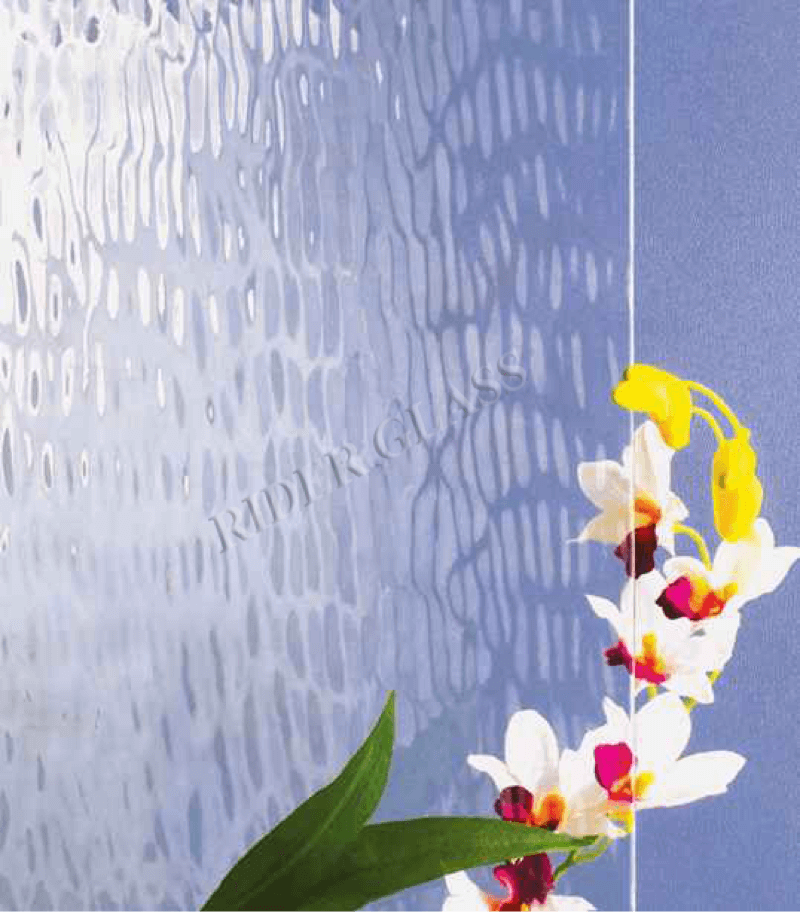
Architectural glass manufacturers produce dozens of distinct textures. However, four specific styles dominate the current design landscape. They each serve different aesthetic goals and functional requirements.
The aesthetic profile of moru glass features clean, minimalist vertical lines. These ribbed textures visually elongate interior spaces. They make standard ceilings feel much higher. The lines create a refined, orderly appearance.
Performance-wise, it delivers high light diffusion. It offers moderate privacy. Shapes behind the panel appear blurred. However, contrasting colors remain distinctly visible. It does not completely hide background clutter.
Best use cases include interior partitions and sliding doors. Modern retail displays frequently utilize this texture. It also upgrades kitchen cabinetry beautifully. The clean lines match modern and Japandi design philosophies perfectly.
The aesthetic profile showcases a subtle, organic, semi-opaque stippling. It closely resembles the skin of an Asian pear. This granular finish scatters light randomly in all directions. It lacks the rigid geometry found in fluted panels.
In terms of performance, nashiji glass provides a very high privacy level. It delivers strong, subtle obscurity. You cannot distinguish shapes or details through it. Additionally, it excels at hiding fingerprints and water spots.
Best use cases involve intimate or high-traffic spaces. Bathroom windows and frameless shower enclosures rely on it heavily. Home office doors benefit from the visual separation. It also serves functional industrial uses, including solar PV glass bases.
This style offers a classic, retro, structured diamond grid. The distinct cross-hatching creates an unmistakable vintage aesthetic. It brings a bold, architectural presence to any frame.
Performance hinges on symmetrical light refraction. The deep grid lines cause heavy privacy blocking. Light dances across the facets dynamically. However, visibility through the panel remains severely restricted.
Best use cases center on vintage-inspired decor. Custom furniture and feature lighting fixtures often feature diamond pattern glass. It looks exceptional in decorative transoms above doorways. You should use it as an accent rather than a vast wall treatment.
The aesthetic profile features elaborate, organic floral imprints. These botanical motifs evoke a sense of heritage and craftsmanship. The deep embossing creates a highly decorative, ornate surface.
Performance yields variable privacy. It depends entirely on the exact motif density. Tightly clustered floral patterns block views effectively. Sparser designs allow clear sightlines between the embossed leaves.
Best use cases include boutique hospitality environments. Heritage restorations and classical renovations require this traditional look. It works beautifully for statement architectural inserts in luxury entryways.
You need a structured comparative analysis framework to make informed decisions. We measure performance across three distinct variables. These include the privacy scale, light transmittance, and daily maintenance requirements.
The following chart illustrates the privacy scale. We rank obscurity from 1 (lowest) to 5 (highest).
Pattern Type | Privacy Scale (1-5) | Light Transmittance Ranking | Maintenance & Cleanability |
|---|---|---|---|
Nashiji | 5 (Maximum Obscurity) | Medium (Diffused evenly) | Moderate (Hides spots well) |
Flora | 4 (High Obscurity) | Low (Blocked by deep grooves) | Difficult (Requires detailed scrubbing) |
Diamond | 4 (High Obscurity) | Medium-High (Symmetrical) | Difficult (Corners trap dust) |
Moru | 3 (Moderate Obscurity) | High (Maximum brightness) | Easy (Straight vertical lines) |
Maintenance plays a crucial role in commercial applications. Moru is the easiest to clean due to straight vertical lines. Squeegees glide down the surface effortlessly. Conversely, Flora and Diamond require more manual effort. Their complex grooves trap dust and cleaning solutions.
You must map specific project goals directly to the optimal pattern. This selection logic guarantees client satisfaction. Consider the following common scenarios:
Goal: Maximize natural light in a dark hallway. You should select Moru. It allows light to flood the corridor while obscuring the adjacent rooms.
Goal: Hide messy inventory in a commercial cabinet. You should choose Nashiji. Its maximum obscurity completely masks the clutter behind the doors.
Goal: Create a focal point in a retro bar. You should specify Diamond. The vintage grid reflects ambient lighting beautifully.
Specifying textured glass requires strict attention to manufacturing standards. Quality manufacturers adhere to rigorous safety baselines. Common compliance standards include GB15763.2-2005 and GB/T 9963-1998. These certifications guarantee thermal stability and structural consistency.
The physical properties determine structural limits. Thickness availability typically ranges from 3mm to 12mm. The most common thickness for interior residential use sits between 3mm and 6mm. Frameless commercial partitions usually demand 8mm to 10mm panels.
Durability remains a strong selling point. The solid cast structure boasts Mohs Hardness ratings between 5 and 9. This high rating indicates excellent resistance to surface scratching and daily wear.
Furthermore, these materials support extensive deep processing viability. You are not limited to raw, annealed sheets.
Tempering: The material offers high structural stability during thermal processing. Industry-leading factories achieve up to a 98% toughening yield rate. You can specify both physically and chemically tempered panels for safety zones.
Laminating & Double Glazing: They are fully compatible with PVB or SGP interlayers. You can laminate two textured sheets together. This creates acoustic, anti-UV, and fire-resistant applications. You can also integrate them into Insulated Glass Units (IGUs) for exterior facades.
Edgework: Advanced CNC machines handle these textures easily. Factories provide capabilities for flat polished edges. They can also execute curve, oval, or irregular custom cuts.
Even the best material fails if installed incorrectly. You must anticipate implementation realities and specification risks. Practical experience reveals several common pitfalls in the field.
Orientation matters significantly during installation. Patterned glass is typically smooth on one side and embossed on the other. This single-sided casting requires careful planning for wet zones. For shower screens, the smooth side must face the water. If you expose the textured side to daily showers, limescale builds up rapidly inside the grooves. Hard water stains become impossible to remove.
You must also account for tempering distortion risks. While highly temperable, deep-grooved textures pose thermal challenges. Heavy Diamond grids heat and cool unevenly in the furnace. This uneven thermal expansion can cause roller wave distortion. The surface may develop a slight optical warp. Always partner with experienced processors who utilize precise thermal control protocols.
Framing and weight calculations demand strict attention. Thicker specifications used for frameless office partitions carry significant mass. An 8mm or 12mm ribbed panel weighs substantially more than standard 6mm float glass. This increased dead load requires heavy-duty architectural hardware. Standard hinges and tracks will sag over time. Always upgrade your structural supports when specifying thicker textured panels.
Choosing the right texture transforms ordinary projects into extraordinary spaces. We can summarize the shortlisting next steps clearly. Moru glass serves as the default choice for modern, light-filled minimalist spaces. Nashiji glass provides unmatched practical privacy for bathrooms and industrial zones. Diamond and Flora serve highly specific aesthetic niches, perfect for retro or heritage designs.
You should follow specific actionable advice before finalizing your material schedules. Always request large physical samples. You must test light refraction and privacy under the project's actual lighting conditions. Factory lighting differs drastically from residential sunlight. Finally, review all factory compliance certifications prior to finalizing vendor contracts. Ensure the manufacturer guarantees high tempering yields and strict thickness tolerances.
A: Yes, when laminated or incorporated into double-glazed units (IGUs), patterns like Nashiji and Moru offer excellent anti-UV properties and durability. Architects frequently specify them for exterior facades, architectural greenhouses, and solar PV applications where light diffusion is critical.
A: In its raw annealed state, no. However, it can be physically or chemically tempered to meet rigorous international safety glass standards. Once tempered, it becomes highly impact-resistant and safe for high-traffic doors, stair balustrades, and commercial partitions.
A: Generally, it carries a slight premium over standard clear float glass due to the specialized double-roll casting process. However, it is often more cost-effective than custom acid-etched or heavily frosted safety glass. It also offers higher durability against daily scratches and smudges.


