Views: 0 Author: Site Editor Publish Time: 2026-05-16 Origin: Site


Specifying safety glass requires balancing strict structural codes, aesthetic demands, and project budgets. The choice of the central bonding layer dictates how the entire system performs under stress. If you fail to match the interlayer to environmental demands, you risk catastrophic failure or costly replacements down the line. While both Polyvinyl Butyral (PVB) and SentryGlas Plus (SGP) dominate the market, their chemical composition differs drastically. Their distinct structural behaviors make them non-interchangeable in high-stakes environments. You cannot simply swap one for the other and expect identical performance. This guide breaks down the engineering realities of choosing between a PVB vs SGP setup. We provide a clear framework for specification without the sales fluff. You will learn exactly how each material reacts to loads, severe weathering, and modern architectural demands.
PVB is a flexible thermoplastic ideal for framed applications, acoustics, and cost-effective everyday safety.
SGP is an ionoplast polymer offering up to 5 times the tear strength and 100 times the stiffness of standard PVB, making it mandatory for demanding structural and frameless designs.
The true cost of your safety glass core isn't just the price per square foot; SGP's superior strength often allows for thinner glass profiles, offsetting its higher upfront material cost through reduced framing and weight.
Polyvinyl Butyral (PVB) functions as a standard thermoplastic. It stays highly flexible and absorbs impact energy efficiently. However, PVB remains susceptible to creeping under sustained loads. Creeping refers to the slow deformation of a material subjected to continuous stress. Conversely, SentryGlas Plus (SGP) operates as an ionoplast polymer. It contains metallic ion bonds. These unique bonds yield extreme rigidity under heavy pressure. When architects specify a safety glass core, this baseline chemistry ultimately determines long-term structural success.
Standard PVB experiences a steep drop in shear modulus when surface temperatures exceed 30°C to 40°C. At this specific threshold, it loses its ability to transfer shear forces between the glass panes. The glass panels begin to act independently, weakening the entire assembly. Contrast this behavior against SGP. SGP maintains high stiffness and structural coupling across a much wider temperature range. You can rely on it during scorching summer days without fearing structural degradation.
The "suspension test" reveals a harsh engineering reality. When both outer glass panes shatter, a PVB-based system tends to sag heavily. It may eventually tear under extreme weight. SGP acts as an independent structural element on its own. It remains completely rigid. It supports heavy weight even post-breakage. This unique trait keeps occupants completely safe from falling glass hazards.
Best Practice: Always request post-breakage suspension test data from your fabricator if you are designing overhead glass canopies.
Common Mistake: Specifying PVB for horizontal overhead glazing where sustained summer heat will melt its structural coupling, causing the bottom pane to sag dangerously.
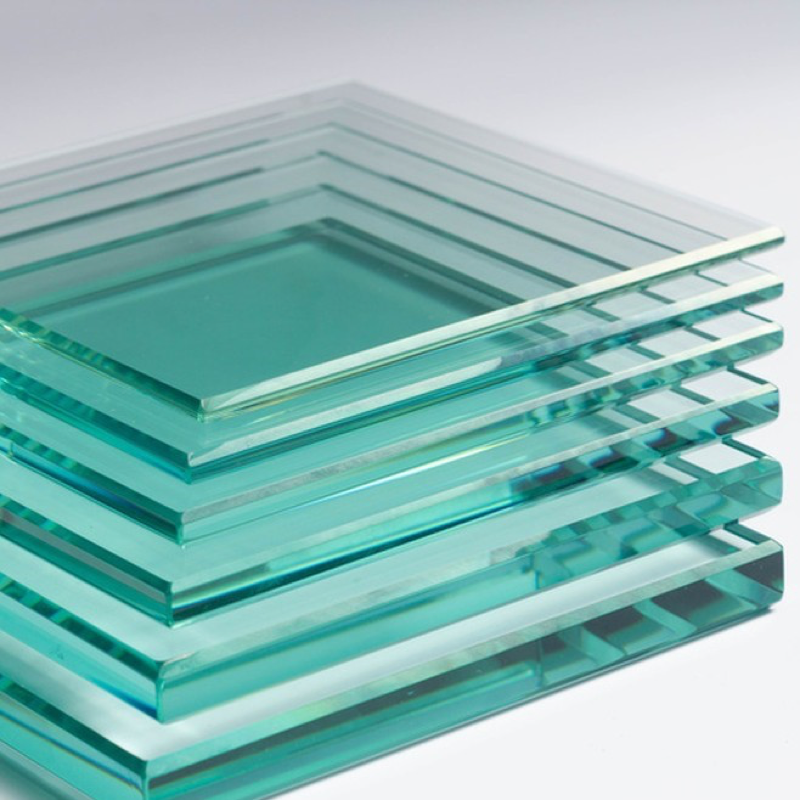
Exposed PVB edges absorb moisture rapidly from the surrounding environment. This constant weather exposure creates a major delamination risk. You will often see visible edge delamination and severe clouding within one to two years. The SGP advantage entirely eliminates this worry. It remains highly moisture-resistant. You do not need expensive edge capping or protective framing to maintain edge integrity in exterior or coastal climates.
PVB provides superior acoustic damping. It easily reduces severe noise pollution by up to 30 decibels. This makes it optimal for busy urban residential environments. However, SGP sacrifices some of this acoustic dampening for pure structural load-bearing capacity. You must clearly decide whether noise reduction or structural strength drives your core design.
SGP offers notably lower haze and higher overall transparency. This becomes critical when you use low-iron extra-clear facades for premium projects. SGP also actively resists UV yellowing over decades of exposure. It keeps the building envelope looking pristine and modern. We rely on a high-quality laminated glass interlayer to maintain both safety and aesthetic purity.
Performance Dimension | Standard PVB | SGP (Ionoplast) |
|---|---|---|
Tear Strength | Baseline standard | Up to 5 times higher |
Rigidity / Stiffness | Low (Flexible) | Up to 100 times higher |
Moisture Resistance | Poor (Delaminates if exposed) | Excellent (No capping needed) |
Acoustic Damping | Superior (Up to 30dB reduction) | Moderate |
Optical Clarity | Good (Prone to slight yellowing) | Exceptional (High UV resistance) |
Let us establish the basic market reality. SGP generally costs 1.5 to 3 times more per square foot than standard PVB. This initial financial shock often deters budget-conscious buyers and developers. However, looking only at the raw material price per square foot creates a false financial narrative.
Specifying SGP allows engineers to safely reduce the overall thickness of the laminated glass. Lighter glass means less reliance on heavy structural framing. You can use lighter architectural hardware. Lighter panels also mean cheaper shipping and easier hoisting on the job site. This smart engineering strategy potentially neutralizes the higher interlayer cost. You save money directly on structural supports and installation labor.
Factor in the drastically reduced maintenance demands. You experience zero edge-decay replacement costs over the building's lifespan. Furthermore, many insurance companies offer premium discounts for SGP used in hurricane-prone zones. It easily meets the strictest wind-borne debris standards, including Miami-Dade NOA protocols. This creates excellent long-term value and regulatory peace of mind.
We must match the correct safety glass to the exact architectural application. Using the wrong material leads to failed inspections and safety hazards. Here is a definitive breakdown of where to deploy each material effectively.
Interior partitions, framed windows, and storefronts: The edges remain fully captured and protected from moisture.
Projects prioritizing acoustic insulation: Hotels, recording studios, and urban apartments benefit heavily from PVB's sound-dampening qualities.
Emergency replacements: Fabricators can cut standard PVB panels post-lamination. This allows for rapid emergency repairs.
Frameless exterior balustrades, glass floors, and stair treads: SGP prevents moisture delamination on exposed edges and easily supports human weight.
High-altitude commercial facades and point-supported canopies: The extreme stiffness prevents the glass from bowing under intense wind loads.
Extreme environments: Facilities requiring high-security blast mitigation or extreme weather resistance absolutely require SGP to prevent catastrophic structural collapse.
Both PVB and SGP require strict autoclave processing. This machinery uses immense heat and pressure to squeeze trapped air out of the layers. This contrasts sharply with EVA, which fabricators can process in a simple vacuum oven. You must rigorously vet capable glass fabricators to ensure correct autoclave cycles. Improper processing inevitably leads to dangerous internal bubbling.
Always reference established industry benchmarks when specifying materials. Standard guidelines include EN 16612 Annex D, ASTM, and UL standards. Choosing SGP guarantees compliance with the highest stiffness classifications for structural glazing. You satisfy strict global building codes instantly.
Older SGP iterations required specific tin-side primers for proper chemical adhesion. This complex requirement often led to human error during assembly. Fortunately, newer generations like SentryGlas Xtra have entirely resolved this frustrating issue. Fabricators now experience fewer errors. They enjoy a much smoother lamination process, which ultimately reduces lead times for your project.
Do not over-engineer with SGP if a standard framed PVB setup already meets your local structural code. PVB provides excellent acoustics and budget-friendly safety for captured glass. However, you must never compromise with PVB on frameless exterior applications. In those scenarios, edge stability and post-breakage rigidity act as non-negotiable life-safety requirements.
We encourage you to consult your structural engineer for precise load calculations. Request a physical material sample and a system-level ROI breakdown from your trusted glass fabricator before finalizing your specification.
A: We strongly advise against using standard PVB outdoors without a frame. Exposed PVB edges absorb moisture quickly. This leads to severe edge delamination and clouding within a year. For frameless outdoor applications, always recommend SGP or specialized rigid PVB options equipped with robust edge protection.
A: Yes, both PVB and SGP effectively block over 99% of harmful UV radiation. They both protect building interiors from sun damage. However, SGP completely avoids the long-term yellowing issues sometimes seen in standard PVB installations. It maintains superior optical clarity over decades of sun exposure.
A: Yes. SGP stands as the definitive industry standard for high-strength structural applications. It significantly outperforms both standard PVB and EVA in tensile strength and shear modulus. SGP provides unmatched rigidity and maintains structural integrity even if both glass panels break completely.


