Views: 0 Author: Site Editor Publish Time: 2026-06-23 Origin: Site


Specifying glass for modern facades goes far beyond simple aesthetics. The architectural decision to specify low-E glass for energy-efficient buildings directly impacts a building's baseline HVAC capital requirements. It also dictates long-term operational expenditures. You must account for thermal transfer in every major project.
Modern building codes effectively mandate high-performance glazing. Standards like ASHRAE 90.1 and IECC push the industry forward. Green certifications like LEED v4 require strict adherence to energy models. Standard clear glass no longer meets these rigorous demands. We need advanced solutions to meet modern efficiency goals.
This guide helps you transition from basic material awareness to specification readiness. You will compare distinct manufacturing processes. We evaluate essential thermal performance metrics. Finally, you will learn to mitigate critical installation risks. This ensures your next architectural facade performs exactly as modeled.
Coating Selection Dictates Performance: The choice between pyrolytic (hard coat) and vacuum sputtered (soft coat) dictates the balance of natural light, heat gain, and heat retention.
Climate Trumps Universal Specs: High solar heat gain coefficients (SHGC) suit heating-dominated climates, while triple-silver low-E coatings are critical for cooling-dominated zones.
Metric Interdependence: Evaluating thermal insulation glass requires balancing U-Value, SHGC, and Visible Light Transmittance (VLT) to optimize the Light-to-Solar Gain (LSG) ratio.
Implementation Risk: Soft-coat low-E glass requires strict handling protocols (edge deletion, insulated glass unit encapsulation) to prevent oxidation and warranty failures.
Standard clear glass accounts for significant thermal transfer in building envelopes. This inherent weakness forces commercial HVAC systems to overcompensate continuously. Mechanical systems must work harder to maintain interior temperatures. Consequently, you face increased peak load requirements. Daily energy consumption also rises dramatically.
How do we solve this thermal weakness? The answer lies in the microscopic low-E mechanism. Manufacturers apply ultra-thin metallic layers to the glass surface. These layers selectively filter the solar spectrum. They allow visible light to transmit freely into the space. Simultaneously, they reflect long-wave infrared heat away from the building. This selective filtration keeps interiors cooler in summer and warmer in winter.
Integrating energy-efficient glazing redefines project success criteria. We look beyond basic weatherproofing. Successful implementation directly influences multiple structural and mechanical outcomes. You can measure this ROI through specific performance indicators.
Reduced energy modeling targets: Accurate forecasting shows lower baseline consumption.
Downsized mechanical equipment: Engineers can specify smaller chiller and boiler units.
Enhanced spatial usability: Perimeter zones become comfortable for continuous occupation.
Improved occupant comfort: Reduced radiant heat transfer minimizes tenant complaints.
Best Practice: Always run preliminary energy models comparing standard insulated units against advanced coated alternatives. This validates the mechanical downsizing potential early in the design phase.
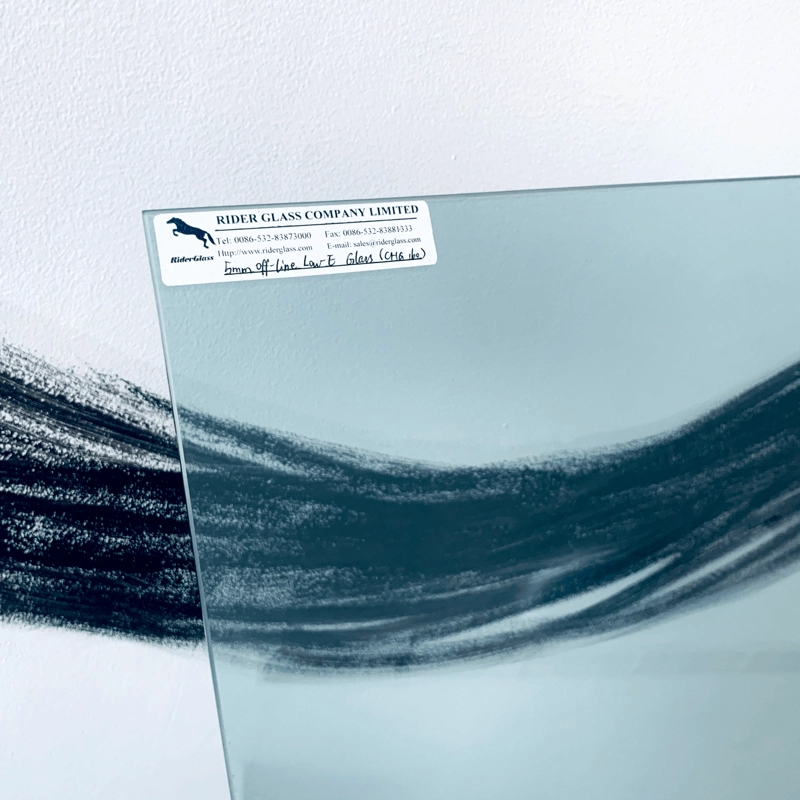
Understanding coating types is critical for accurate specification. Manufacturers primarily use two distinct processes. Each method produces coatings with unique physical and thermal properties.
Passive low-E glass utilizes a pyrolytic process. Industry professionals often call this a hard coat. Manufacturers apply a thin layer of tin oxide to the glass. This application happens during the molten float glass stage. The extreme heat fuses the metallic oxide directly to the glass surface. This creates a highly durable product. Fabricators can handle it much like standard clear glass. Hard coat low-E excels in heating-dominated climates. It allows passive solar heat gain to enter the building. This natural heating reduces winter boiler loads.
Solar control low-E utilizes a completely different manufacturing approach. It relies on vacuum sputtered glass technology, commonly known as a soft coat. Facilities apply this coating off-line to pre-cut glass. They use Magnetron Sputter Vacuum Deposition (MSVD). This process allows for multiple layers of silver.
Silver layers determine the performance intensity. A single silver layer provides baseline solar control. Double silver improves the balance of light and heat. Triple silver layers drastically reduce the solar heat gain. Impressively, they maintain high visible light transmittance. Soft coats perform best in cooling-dominated commercial buildings. They deliver maximum solar control against harsh summer sun.
Selection logic demands careful evaluation. You must weigh upfront procurement constraints against expected long-term energy savings. Complex multi-silver coatings require specialized manufacturing. However, their ability to reject solar heat provides substantial mechanical savings.
Comparison: Hard Coat vs. Soft Coat Low-E Glass | ||
Feature | Passive (Hard Coat) | Solar Control (Soft Coat) |
|---|---|---|
Manufacturing Process | Pyrolytic (Molten Stage) | MSVD (Off-line) |
Durability | High (Fused surface) | Delicate (Requires sealing) |
Primary Application | Heating-Dominated Climates | Cooling-Dominated Climates |
Solar Heat Gain | High (Allows passive heat) | Low (Rejects radiant heat) |
Specifying the right thermal insulation glass requires interpreting technical data sheets. You must understand how different metrics interact. Adjusting one value often changes another. Let us break down the core variables.
U-Value (Insulating Performance): This metric measures heat transfer through the glass. Temperature differences between the interior and exterior drive this transfer. A lower U-Value indicates better insulation. Low-E coatings actively lower this number. Performance improves further when paired with inert gases. Argon or krypton gas fills in double or triple-pane units slow thermal transfer significantly.
Solar Heat Gain Coefficient (SHGC): This represents the fraction of incident solar radiation admitted through the window. It includes both directly transmitted heat and absorbed heat radiated inward. You face necessary trade-offs here. High SHGC (0.40 or greater) helps with winter heating. Conversely, low SHGC (under 0.25) is vital for summer cooling.
Visible Light Transmittance (VLT) & Daylighting: VLT measures the percentage of visible light passing through the glazing. High VLT brightens interior spaces. This reduces your reliance on artificial lighting. However, you must balance VLT with glare control. Too much light creates uncomfortable workspaces.
Light-to-Solar Gain (LSG) Ratio: This represents the ultimate efficiency benchmark for glazing. You calculate it by dividing VLT by SHGC. A high ratio means the glass transmits abundant light while blocking heat. A ratio above 1.25 indicates highly efficient performance.
Common Mistake: Specifying the lowest possible U-Value without checking SHGC. In cold climates, a slightly higher U-Value might be acceptable if it allows a much higher SHGC for passive solar heating.
Universal specifications rarely work in commercial architecture. You must align your glazing choices with local environmental demands. Low-E coated glass requires strategic placement to maximize efficiency.
Heating-dominated climates dominate northern zones. The primary strategy here focuses on maximizing solar heat retention. You want the winter sun to warm the interior naturally. We recommend hard coat low-E for these applications. You should place the coating on the #3 surface of an Insulated Glass Unit (IGU). This position allows solar energy in but prevents interior radiant heat from escaping.
Cooling-dominated climates define southern and equatorial zones. The strategy reverses completely. You must reject solar heat while maintaining adequate daylight. Double or triple-silver vacuum sputtered coatings work best here. Apply these advanced soft coats on the #2 surface. This placement reflects solar radiation away before it penetrates the inner pane.
Mixed climates require a nuanced approach. A single building may experience different thermal loads on different sides. Smart specification involves varying the coatings by facade orientation. North elevations might prioritize U-Value. South elevations need robust SHGC control. East and west facades face harsh, low-angle sun. They often require the most aggressive solar control coatings.
Furthermore, you must integrate glazing with opaque systems. The thermal performance of windows should align with adjacent wall materials. Ensure your strategy matches the efficiency of the neighboring building energy saving panel. Whether using spandrel glass or insulated metal panels, maintain continuous facade efficiency. Disjointed thermal boundaries cause condensation and energy loss.
Specifying high-performance glass introduces practical challenges. Field execution dictates actual performance. You must account for manufacturing limitations and handling protocols. Ignoring these risks leads to project delays and material failures.
Durability remains a primary concern for soft coat low-E. MSVD coatings oxidize rapidly if exposed to ambient air. They lose their performance properties and visual clarity. Therefore, fabricators must hermetically seal them within an IGU.
This sealing requirement introduces the need for edge deletion. Fabricators strip the low-E coating away from the very edge of the glass perimeter. The IGU primary sealant must adhere directly to the bare glass substrate. If sealant touches the low-E coating, the bond eventually fails. This leads to moisture penetration and voided warranties.
Thermal stress breakage poses another significant risk. High-performance glass absorbs massive amounts of heat. The center of the glass becomes much hotter than the shaded edges. This temperature differential causes the glass to expand unevenly. Thermal cracking can occur rapidly. You must evaluate the necessity for heat-strengthened or fully tempered glass. Heat treating strengthens the glass to withstand these severe thermal loads.
Visual aesthetics require strict management. Multi-layer silver coatings inherently introduce subtle tints. You might notice green, blue, or neutral hues depending on the specific product. Achieving uniformity across large architectural facades is difficult. Variations in glass thickness or coating batches cause color shifts. Always request full-size mockups. View them under natural lighting conditions before final approval.
Finally, consider lead times and sourcing logistics. Advanced MSVD coating lines operate in limited geographic areas. Not every local fabricator can produce complex triple-silver IGUs. Factor these availability constraints into your project construction schedule early. Delays in glass procurement frequently stall entire enclosure installations.
Low-E glass transcends basic commodity status. It acts as a highly engineered facade component defining your building's energy economics. The correct coating balances light, heat, and insulation to meet rigorous modern codes. It requires careful alignment with your specific climate zone and facade orientation.
To finalize your glazing specification effectively, take the following next steps:
Commission comprehensive building energy modeling (BEM) to validate your assumptions.
Review all glass performance data sheets to ensure they carry NFRC certification.
Consult with a dedicated facade engineer to verify thermal stress risks.
Request physical glass mockups to evaluate visual color shifts on site.
Confirm the geographic availability and lead times with your preferred glazing manufacturer.
A: Coating placement depends on your climate. For cooling-dominated climates, place the coating on Surface #2. This reflects solar heat outward. For heating-dominated climates, place it on Surface #3. This allows passive solar heat in while reflecting interior heat back into the room.
A: Low-E glass filters the solar spectrum, primarily targeting infrared heat. It does block a significant portion of UV radiation. However, it is not a complete UV shield. For maximum UV blockage, specify laminated glass with a PVB interlayer alongside your low-E coating.
A: Yes. High-performance projects often use dual-coated triple-pane IGUs. You can apply a soft coat on Surface #2 for solar control, and a hard coat on Surface #5 (or #6) to maximize interior heat retention. This combination routinely meets extreme passive house standards.
A: Low-E coatings contain continuous microscopic metallic layers, particularly silver. These metals can cause mild radio frequency (RF) attenuation. While a single window will not block signals, a continuous commercial facade using triple-silver coatings may weaken incoming cellular and RF signals slightly.


