Views: 0 Author: Site Editor Publish Time: 2026-05-14 Origin: Site


Modern architecture faces a persistent, fundamental dilemma. Homeowners and designers crave expansive walls of natural light to illuminate their spaces. However, massive glass facades often carry the heavy penalty of extreme summer heat gain and severe winter heat loss. You no longer have to choose between bright, sunlit rooms and comfortable indoor temperatures. A microscopic, invisible barrier now exists to resolve this exact conflict effortlessly. We call it low-e coating technology.
This article serves as your technical and practical evaluation guide. We will explore the microscopic silver layers driving thermal performance. We will also teach you how to interpret key efficiency metrics. Finally, we will help you select the right window specification to match your unique climate and budget. By understanding these concepts, you can optimize both building comfort and energy expenditure.
The Technology: Low-e coatings are up to 500 times thinner than a human hair, utilizing microscopic silver layers to filter out heat-inducing infrared rays while letting visible light pass.
The Two Approaches: "Soft coat" (sputtered) maximizes infrared reflection for hot climates; "Hard coat" (pyrolytic) provides durable passive heating for cold climates.
The Financials: Upgrading to low-e glass typically adds a $40–$100 premium per window but yields a 2-to-6-year payback period through 15–30% reductions in HVAC costs.
The Trade-offs: High-performance triple-silver coatings approach the theoretical limits of physics, offering maximum efficiency but introducing slight visual color shifts (green/blue/gray).
To understand modern window efficiency, we must first dissect the solar spectrum. Sunlight contains three distinct types of energy. First, we have visible light, which illuminates our rooms. Second, we have ultraviolet (UV) light, which causes furniture and hardwood floors to fade. Finally, we have infrared light. Infrared radiation acts as pure heat. Many people do not realize that nearly 50% of incoming solar energy exists as invisible infrared heat.
This is where infrared reflection glass demonstrates its value. It acts as a highly selective filter. Think of it as a transparent thermos for your home. During blazing summer months, the glass reflects short-wave solar infrared energy away from the building. It stops the heat before it enters. Conversely, during freezing winter nights, the exact same glass reflects long-wave infrared energy back inside. This long-wave heat comes from your furnace, your radiators, and even your body heat.
We measure this heat-shedding ability using a metric called emissivity. Emissivity rates how well a surface radiates absorbed heat. Standard uncoated glass has an emissivity rating of roughly 0.84. This means it acts as a massive thermal bridge, highly conductive to heat transfer. In stark contrast, high-performance energy saving glass can drop emissivity to as low as 0.02. This drastic reduction essentially stops thermal transfer in its tracks, keeping your interior temperatures stable regardless of exterior weather.
When industry professionals discuss these coatings, they rarely refer to a single ingredient. The coating is actually a complex, microscopic chemical stack. This stack measures roughly 250 nanometers thick. To put this in perspective, it is hundreds of times thinner than a single strand of human hair. The stack alternates active metallic layers—primarily silver—with protective dielectric layers made of ceramics or metal oxides. These dielectrics protect the fragile silver from moisture and physical damage while fine-tuning the optical clarity.
The progression of silver layer glass represents one of the most significant leaps in modern material science. Over the last few decades, engineers have continuously pushed the boundaries of this stack. Let us trace this technological progression and examine the diminishing returns of adding more layers:
Single-Silver: This represents the baseline standard for coated windows. It blocks basic UV and infrared radiation. However, it often suffers from lower visible light transmission, making rooms feel slightly darker.
Double-Silver: Introduced as a massive breakthrough in the 1990s. By adding a second silver layer separated by dielectrics, manufacturers improved heat blocking by 30%. Crucially, they achieved this without sacrificing visible light.
Triple-Silver: This is the modern commercial standard. It utilizes 12 or more stacked chemical layers. It transmits approximately 70% of visible light while blocking nearly 75% of solar heat. It perfectly balances optical clarity and heat rejection.
Quad-Silver: The current cutting edge of window technology. It pushes heat blocking near an incredible 80%. However, aesthetic trade-offs become prominent. It reduces light transmittance further and increases manufacturing costs. For standard residential projects, the marginal return on investment remains debatable.
Best Practice: Do not automatically assume "more silver is better." For a standard home in a moderate climate, a double-silver or triple-silver stack offers the perfect sweet spot between price, visual clarity, and thermal performance.
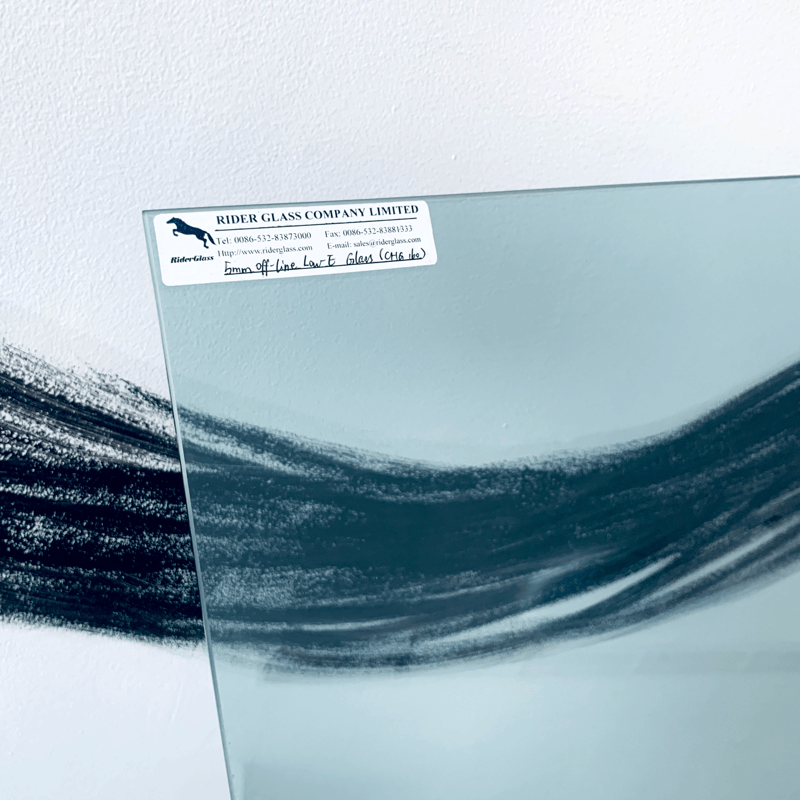
Not all coatings are created equal. Manufacturers apply these microscopic layers using two distinct technological processes. Your local climate dictates which process you should choose. We categorize them primarily into "Hard Coat" and "Soft Coat" applications.
Manufacturers create hard coat glass by baking the metallic oxides directly onto the glass ribbon while it is still semi-molten. Because they apply it at extremely high temperatures, the coating physically fuses with the glass surface. This makes the coating incredibly durable and highly resistant to oxidation or scratching.
However, hard coats allow a fair amount of solar heat to pass through. We call this "passive heating." They are less effective at overall insulation compared to modern alternatives. Therefore, pyrolytic coatings are best suited for extreme northern, cold climates. In these freezing zones, capturing the winter sun's free solar heat provides a massive net positive for your utility bills.
Soft coat glass uses a process called Magnetic Sputtering Vacuum Deposition (MSVD). Manufacturers apply the silver stack inside a massive vacuum chamber at room temperature. This results in a highly fragile coating. If left exposed to ambient air, the silver will quickly oxidize and degrade. To survive, factories must seal the soft coat inside an Insulated Glass Unit (IGU). They also perform "edge deletion," scraping the coating off the very edge of the glass so the structural seal adheres properly.
Despite its fragility during manufacturing, soft coat glass offers vastly superior U-values and unmatched infrared reflection. It is the absolute best choice for mixed and hot climates, where blocking punishing summer heat drives the bulk of energy costs.
Placement matters immensely. In a standard double-glazed window, you have four distinct glass surfaces. We number them from the outside in. Surface #1 faces the exterior weather. Surface #4 faces your interior room. To block maximum summer heat, manufacturers place soft coats on Surface #2. To maximize the retention of interior furnace heat during harsh winters, they place it on Surface #3.
Below is a summary table comparing the two primary manufacturing methods.
Feature | Hard Coat (Pyrolytic) | Soft Coat (MSVD) |
|---|---|---|
Application Method | Baked on molten glass ribbon | Sputtered in a vacuum chamber |
Durability | Extremely durable, resists scratching | Fragile until sealed in an IGU |
Infrared Reflection | Moderate | Excellent / Superior |
Best Climate | Cold, extreme northern regions | Hot, mixed, and moderate regions |
Primary Benefit | Allows passive solar heating | Blocks harsh summer heat gain |
You cannot effectively shop for windows without understanding the numbers. Window manufacturers and building code regulators use four specific metrics to evaluate efficiency. Understanding these numbers allows you to compare products accurately.
U-Value (Insulation): This measures raw heat transfer. A lower U-value means better insulation. It dictates how well the window traps your furnace heat during winter. Meeting local building codes and achieving Energy Star® compliance heavily depends on optimal U-values.
SHGC (Solar Heat Gain Coefficient): This measures how much incoming solar radiation admits heat into your home. It uses a scale from 0 to 1. A lower SHGC means excellent cooling efficiency in the summer. A higher SHGC means you gain more free winter heat.
VLT (Visible Light Transmittance): This represents the percentage of natural daylight the window allows through. A VLT of 0.70 means 70% of available visible light enters the room. Higher is generally better for interior aesthetics.
LSG (Light-to-Solar Gain Ratio): You calculate this by dividing the VLT by the SHGC. It serves as the ultimate efficiency metric. A higher LSG indicates a highly efficient "smart" glass. It means the window transmits abundant light while aggressively blocking heat.
To help visualize how these metrics interact, review the performance chart below.
Chart: Performance Metric Summary & Climate Strategy | |||
Metric | Definition | Goal for Hot Climates | Goal for Cold Climates |
|---|---|---|---|
U-Value | Insulation against heat loss | Low (<0.30) | Very Low (<0.25) |
SHGC | Solar heat allowed inside | Low (<0.25) | Moderate/High (>0.40) |
VLT | Visible daylight entering | High (0.50 - 0.70) | High (0.60 - 0.80) |
LSG | Efficiency ratio (VLT / SHGC) | Very High (>1.50) | Moderate |
Common Mistake: Buyers often obsess over lowering their U-value but completely ignore their SHGC. If you live in Florida or Texas, a low SHGC is far more critical to reducing your air conditioning bills than a record-breaking U-value.
Theory and metrics mean nothing without examining practical realities. When upgrading your home or commercial building, you must weigh the upfront costs against the long-term benefits. You must also consider the visual impact of advanced glazing.
Upgrading to coated glass requires an initial financial premium. You can expect to pay an extra $40 to $100 per window compared to standard clear glass. However, the operational savings quickly erase this premium. Homeowners typically see a 10% to 25% reduction in their monthly utility bills. Consequently, the payback period usually occurs in just two to six years. You can often accelerate this payback through federal incentives. For example, compliant windows frequently qualify for significant IRA tax credits.
Next, you must address the aesthetic trade-off. High-performance coatings rely on metals. As you stack more silver layers to block heat, the glass begins to change visually. Triple and quad-silver applications can introduce subtle greenish or bluish tints. They also increase exterior reflectivity slightly. We strongly advise requesting large physical glass mock-ups before specifying these products for an entire house or commercial facade.
Finally, you must navigate installation risks carefully. Legitimate coatings are molecularly bonded in multi-million-dollar factory environments. We strongly warn against aftermarket DIY films. While cheap, these adhesive films trap heat against the glass. This often causes severe thermal stress fractures. Furthermore, applying an aftermarket film usually voids your original window manufacturer warranty entirely.
Sometimes you move into a new home and wonder if your windows already possess these efficient coatings. You can perform a simple, practical field test without any specialized equipment. We call this the Lighter Test.
Wait for low light conditions or nighttime. Hold a lit lighter or a bright flashlight a few inches away from your double-glazed window. Look closely at the reflection. Because the window has two panes of glass, you will see four distinct reflections of the flame (one for each surface). If all four flames appear the exact same standard yellowish color, you have standard clear glass. If one of the reflections shows a distinct color—usually pink, amber, blue, or green—a metallic coating is actively filtering the light. You have efficient windows.
If you are actively shopping for new windows, use this checklist to guide your purchasing decisions:
Identify your primary climate pain point: Are you spending more money on winter heating or summer cooling? This dictates whether you need a passive hard coat or a solar control soft coat.
Check specific product data sheets: Do not rely on marketing brochures. Ask for the U-Value and SHGC numbers to verify Energy Star or LEED certification compliance.
Consult a verified fabricator: Discuss facade orientation. North-facing windows receive zero direct sunlight and might need a different coating specification than aggressively sunny West-facing windows.
Request edge deletion verification: If buying soft coat IGUs, ensure your manufacturer uses automated edge deletion to guarantee the seal longevity.
High-performance low-e glass is no longer a luxury architectural upgrade. It stands as a baseline requirement for sustainable building practices and long-term financial cost control. By acting as a selective filter, these microscopic layers allow us to build beautiful, light-filled spaces without suffering the thermal consequences.
To maximize your investment, keep these final action-oriented takeaways in mind:
Never base your purchasing decisions on the assumption that "more silver is automatically better."
Match your specific coating stack to your exact climate zone. Use high SHGC for cold regions and low SHGC for hot regions.
Ensure your manufacturer places the coating on the correct surface (Surface #2 for cooling, Surface #3 for heating).
Always rely on factory-applied coatings rather than risky aftermarket DIY films.
A: Factory-applied coatings typically last 15 to 30 years. Because manufacturers seal soft coats safely inside the airtight Insulated Glass Unit (IGU), the coating remains protected from dust and moisture. Essentially, the coating will perform effectively for as long as the window's structural seal remains intact.
A: No. Genuine factory coatings rely on complex molecular bonding applied in giant vacuum chambers or baked onto semi-molten glass. While aftermarket adhesive films exist, they offer significantly inferior performance. Furthermore, they carry a high risk of causing thermal stress fractures and often void your existing window warranties.
A: Yes, it can look slightly different. Advanced coatings may reduce visible light transmittance by roughly 5% to 10% compared to perfectly clear glass. Depending on the specific metallic stack and the manufacturer, the glass may also exhibit a very faint green, blue, or gray tint from the exterior.
A: Most houseplants thrive perfectly fine behind coated windows. These highly engineered coatings permit the necessary visible light spectrum that plants require for photosynthesis. Simultaneously, they block the damaging ultraviolet (UV) rays and excessive baking heat that typically scorch delicate plant leaves.


