Views: 0 Author: Site Editor Publish Time: 2026-05-26 Origin: Site


Noise control dictates the success of modern commercial real estate. You cannot build a premium office space or a high-end hotel if street traffic or hallway chatter penetrates the walls. Many professionals fall into the "thickness myth" during early design phases. They assume specifying thicker panes or standard double-glazing automatically guarantees a quiet environment. However, raw material volume alone rarely stops acoustic energy effectively.
Furthermore, managing expectations remains critical, as no architectural material offers absolute 100% soundproofing. Instead, structural glass typically achieves a 90% to 95% reduction in perceived noise. This effectively pushes intrusive sounds safely below background ambient thresholds. We will explore the exact physics behind acoustic transmission. You will discover why strategic decoupling matters significantly more than sheer mass. Finally, we will break down proven configurations to resolve your specific commercial noise challenges.
Increasing glass mass (thickness) improves sound insulation, but using two panes of the *same* thickness in insulated units actually weakens performance due to acoustic resonance.
The most effective noise reduction glass relies on a three-part acoustic triangle: Mass (thickness), Damping (laminated interlayers), and Decoupling (asymmetrical pane configurations).
Sound Transmission Class (STC) ratings are best for interior office partitions (voices), while Outdoor-Indoor Transmission Class (OITC) ratings are required for commercial facades dealing with low-frequency traffic or transit noise.
System integrity matters: Even an STC-50 glass specification will drop to STC-30 if surrounding frames, doors, or HVAC vents permit "acoustic flanking."
Understanding basic acoustic physics prevents expensive procurement mistakes. Mass plays a foundational role in blocking sound waves. Thicker glass increases overall mass. Sound waves must expend far more energy to pass through heavy materials. Standard commercial pane thicknesses typically range from 1/8-inch up to over 1-inch in complex composite systems. Adjusting acoustic glass thickness remains the most common starting point for engineers designing quiet spaces.
You must understand logarithmic sound reduction to interpret acoustic data properly. Sound does not scale linearly. Every 3 decibel (dB) drop represents a 50% reduction in acoustic energy. However, human ears perceive sound differently. A 10 dB drop in acoustic transmission equates to a 50% reduction in perceived noise. If you upgrade a window system and achieve a 10 dB improvement, the room will sound half as loud to the occupants inside.
You cannot solve every acoustic challenge simply by pouring more glass into a frame. Endlessly increasing monolithic thickness proves structurally inefficient. Extremely thick single panes add massive dead load to building facades. They also create unwanted visual distortion. True acoustic performance requires structural modification. We must rely on intelligent material engineering rather than just raw material volume.
Architects rely on standardized metrics to grade acoustic materials. Using the wrong metric often leads to failed installations. You must align the measurement standard with the specific noise source.
STC evaluates how well a material blocks airborne sound. The testing covers frequencies between 125 Hz and 4000 Hz. This range primarily encompasses human speech, ringing phones, and typical office equipment. STC serves as the standard metric for interior partitions.
Practical Mapping of STC Ratings | ||
STC Rating | Acoustic Experience | Ideal Commercial Application |
|---|---|---|
STC 30-35 | Loud speech is audible but not highly intelligible. | Standard open-plan office dividers. |
STC 40-45 | Loud speech is reduced to a faint murmur. | Private meeting rooms and HR offices. |
STC 50+ | Extreme privacy; shouting is barely audible. | Executive boardrooms and recording studios. |
OITC provides a more rigorous test for exterior walls. It measures lower frequencies down to 80 Hz. This captures heavy street traffic, aircraft engines, and passing trains. Low-frequency noise easily penetrates materials that successfully block high-frequency speech.
Buyer Warning: Specifying high-STC glass for a street-facing facade is a common procurement error. If you fail to check the OITC rating, the glass will not block low-frequency truck rumble. Always match facade materials to exterior environmental testing data.
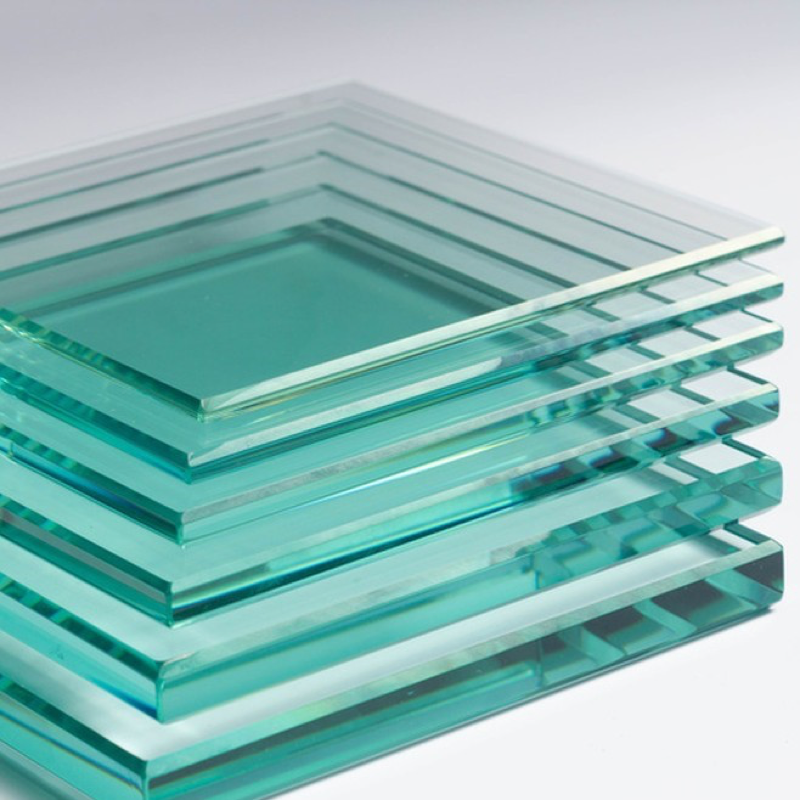
Evaluating raw materials reveals stark differences in acoustic performance. Let us examine how structural configuration changes sound transmission rates.
Monolithic glass consists of a single solid pane. It offers a baseline level of mass but completely lacks decoupling capabilities. A typical 1/4-inch monolithic pane yields around STC 31. This blocks a gentle breeze but fails to provide stringent confidentiality. Monolithic panels suit decorative interior applications where privacy is not a concern.
Thermal IGUs trap a layer of gas between two panes. They provide excellent climate control. However, standard thermal units often fail at acoustic control due to the resonance trap. When you pair two 1/4-inch panes separated by a 1/2-inch air gap, the identical panes vibrate at the exact same frequency. This structural symmetry inadvertently amplifies specific sound waves. Using standard symmetrical insulated glass can perform worse at certain traffic frequencies than a single thick pane.
High-performance environments demand specialized materials. Builders construct these units by bonding multiple glass panes with a viscoelastic polymer interlayer. Manufacturers commonly use PVB (Polyvinyl Butyral) or EVA (Ethylene-Vinyl Acetate). This creates a profound damping effect. The soft inner core actively absorbs low-frequency vibrations. It stops the rigid glass from acting like a speaker membrane. Specifying laminated glass remains the industry standard for superior noise attenuation.
Solving complex acoustic problems requires a layered approach. We use decoupling strategies to break sound transmission pathways. By combining specific materials, we form highly effective barriers.
We must eliminate the resonance effect found in symmetrical units. Engineers solve this by specifying differing pane thicknesses. For example, you might combine a 6mm outer pane with a 4mm inner pane. The mismatched masses vibrate at completely different frequencies. One pane dampens the specific acoustic waves the other pane lets through. This simple asymmetry dramatically improves overall performance.
Acoustic Configuration Summary Chart | ||
Scenario | Primary Noise Source | Recommended Glass Setup |
|---|---|---|
Street-Facing Facades | Low-frequency traffic, trains | 6mm laminated + 16mm-20mm argon gap + 4mm monolithic |
Interior Partitions | Human speech, high frequencies | Single or double laminated acoustic glass (STC 40-45) |
Airport Hotels | Severe low-frequency rumble | 8mm laminated + 20mm argon gap + 6mm laminated |
Urban buildings constantly battle low-frequency vehicle noise. Standard thermal windows cannot handle this load. You should specify an asymmetrical insulated unit incorporating a laminated acoustic pane. A proven configuration includes a 6mm laminated pane facing outward, a 16mm to 20mm argon gas gap, and a 4mm monolithic tempered pane facing inward. This specific noise reduction glass tackles both thermal insulation and heavy traffic rumble simultaneously.
Law firms and corporate boardrooms require stringent speech privacy. Low-frequency traffic noise is rarely the primary threat here. Instead, you must block mid-to-high frequency human voices. We recommend single or double laminated panes pushing into the STC 40-45 range. Modern systems utilize dedicated acoustic PVB layers designed specifically for sound attenuation. These specialized soft cores drastically cut vocal transmission between adjacent rooms.
Even the most advanced structural panels fail if installation remains poor. Sound behaves exactly like water. It always seeks the path of least resistance. Glass sound insulation becomes easily compromised by surrounding architectural flaws. A high-grade pane means nothing if the surrounding wall leaks acoustic energy.
Architects must inspect the entire wall assembly. Acoustic flanking happens when noise bypasses the main barrier through weak structural junctions. Watch out for these three primary failure zones:
Framing & Seals: Poorly insulated mullions or rigid metallic window frames transfer vibration directly into the interior. Hard seals offer no damping. Always specify acoustic-grade rubber gaskets.
Doors: Heavy glass walls often get paired with standard non-acoustic sliding or swing doors. A poorly sealed door instantly drops the entire room's STC rating.
Plenum Spaces: Sound easily travels over the top of a glass partition through suspended drop ceilings. Raised access floors pose the exact same threat beneath the wall.
Do not evaluate vendors solely on isolated panel metrics. Center-of-glass STC numbers look impressive on paper. However, they do not reflect real-world installation realities. We strongly recommend selecting vendors who provide comprehensive system-level acoustic testing. This means they test the glass, the aluminum frame, and the rubber seals together as one unified unit. System-level testing ensures you get the performance you actually paid for.
Achieving true acoustic privacy requires precise material engineering. You must evaluate the specific noise threat before selecting your panels. Identifying whether you need STC or OITC ratings ensures you target the correct frequencies. Avoid symmetrical insulated units that amplify noise through resonance. Instead, leverage asymmetrical configurations and specialized damping interlayers to absorb vibration.
Do not guess when specifying commercial facade materials. We strongly encourage project specifiers to consult with structural acoustic engineers early in the design phase. Match your chosen panel configurations with precise exterior decibel mapping. Approaching noise control systematically protects your building's interior environment and secures long-term occupant satisfaction.
A: Not effectively. While it provides thermal insulation, symmetrical pane thickness can actually amplify certain noise frequencies due to resonance. True noise reduction requires asymmetrical panes and laminated layers.
A: No. While 12mm tempered glass has high mass and impact resistance, 6mm laminated glass typically outperforms it in noise reduction because the PVB interlayer actively dampens vibration.
A: No. Surface treatments, tints, and Low-E coatings exist strictly for light, thermal, or visual control. They have zero measurable impact on STC or OITC ratings.
A: Yes, but indirectly. Smart glass utilizes multiple layers (including PET/ITO films and EVA interlayers) sandwiched between glass panes. This multi-layer composite structure inherently provides excellent damping and sound insulation similar to high-end laminated glass.


