Views: 0 Author: Site Editor Publish Time: 2026-06-27 Origin: Site


Installing glass in or around a pool elevates architectural design significantly. However, the stakes for structural failure remain incredibly high. Aesthetically, it offers a beautiful, seamless viewing experience. Structurally, it must withstand immense static water pressure, dynamic human impacts, and harsh chemical environments. Buyers often conflate the requirements for simple above-ground fencing with complex underwater retaining walls. You might face dangerous under-specifications or bloated engineering requirements if you confuse these two very different applications. This guide breaks down the critical engineering realities, building code compliance mandates, and significant installation risks. We will help you select and specify glass swimming pool panels that guarantee both aesthetic appeal and uncompromising structural safety. You will learn how to navigate material differences, ensure rigid waterproofing, and meet strict global building codes. Understanding these core engineering principles protects your property and ensures long-term structural integrity.
Application dictates specifications: The engineering math for a waterproof glass wall (hydrostatic load) is radically different from a safety pool enclosure (wind/impact load).
Minimum thickness matters: Above-ground enclosures typically require 12mm (1/2") tempered glass, while structural underwater panels require specialized multi-layer laminated glass starting at 38mm+.
Sealing is the weak point: Material failure rarely happens in the glass itself; catastrophic failures usually stem from improper rebate sizing, silicone degradation, or poor channel waterproofing.
Compliance is mandatory: Meeting international building codes (e.g., IBC Chapter 24) and local pool fencing regulations is legally required and dictates liability.
Establishing clear terminology forms the foundation of any successful aquatic project. Using the wrong terms during planning leads to inaccurate structural estimates. It also introduces severe safety risks into the environment. We must distinguish clearly between above-ground barriers and underwater structural elements. Each application faces entirely different environmental physics.
An above-ground pool fence glass setup handles very specific environmental stresses. It must resist strong wind loads safely. It must also absorb dynamic human impacts. Constant weather exposure tests its overall durability over time. Its primary role focuses strictly on child safety and perimeter security. It acts as a secure physical barrier around the water. This barrier prevents unauthorized access effectively. This setup forms a highly reliable safety pool enclosure for residential and commercial spaces. Engineers treat these installations as standard wind-loaded balustrades.
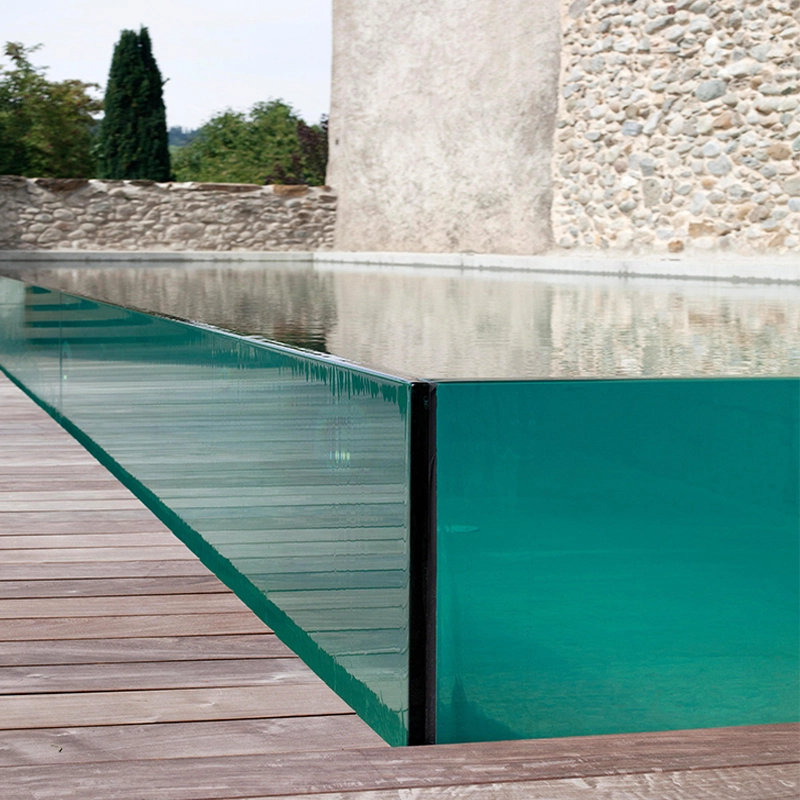
Conversely, an underwater waterproof glass wall serves a vastly different mechanical purpose. Its primary stressor involves unrelenting hydrostatic pressure. Continuous water movement causes dangerous dynamic sloshing loads. This application essentially replaces a traditional solid concrete retaining wall. Therefore, it requires absolute zero-deflection engineering tolerances. A structural glass wall cannot bend or flex under pressure. It must remain entirely rigid to preserve the waterproof silicone seals.
Material selection dictates the ultimate structural success of your project. You must choose the correct manufacturing process for your specific application. Glass types vary wildly in their structural capabilities.
Manufacturers produce tempered pool glass through a process of extreme heating and rapid cooling. This specific thermal process builds high surface compression. It yields incredible impact resistance. If the panel breaks, it shatters into small, blunt cubes safely. It prevents severe laceration injuries completely. It serves as the absolute standard for above-ground fencing.
Laminated glass utilizes a specialized structural interlayer between separate panes. We frequently specify SGP (SentryGlas Plus) ionoplast interlayers for aquatic environments. The manufacturing process bonds multiple glass layers tightly together. If one outer glass layer fractures, the entire panel survives. It maintains vital structural integrity continuously. It continues to retain heavy water loads safely. You must use laminated glass for all underwater panels.
Determining the exact thickness for a single glass swimming pool panel requires precise mathematical modeling.
Above-Ground Fencing Thickness: Fencing panels use relatively thinner profiles. The industry standard ranges from 12mm to 15mm generally. This depends heavily on your chosen spigot spacing. Local wind zone ratings also alter this minimum requirement.
Underwater Panel Thickness: Underwater panels demand much thicker glass compositions. Engineers dictate this thickness based strictly on water depth. They measure the exact hydrostatic water head carefully. They also calculate the maximum unsupported horizontal span. These structural underwater panels typically range from 38mm to over 60mm.
The Safety Margin: Engineers always calculate a strict safety margin for structural glass. They determine the maximum potential water load accurately. Then, they apply a standard safety factor to the math. This multiplier usually sits at 4.0 or higher for retaining walls. This robust factor protects against unexpected dynamic impacts and seismic shifts.
Specification Feature | Above-Ground Fencing | Underwater Structural Wall |
|---|---|---|
Primary Material | Monolithic Tempered Glass | Multi-layer Laminated Glass (SGP) |
Typical Thickness | 12mm – 15mm | 38mm – 60mm+ |
Primary Load Type | Wind and Human Impact | Static Hydrostatic Pressure |
Safety Factor Requirement | Standard Balustrade Codes | 4.0+ Structural Retaining Margin |
Navigating international building standards remains completely non-negotiable. You must adhere to established codes to ensure public safety. Ignoring these frameworks invites structural disaster and massive legal liability.
You must adhere to the International Building Code (IBC) strictly. Specifically, IBC Chapter 24 governs glass and glazing installations worldwide. It outlines rigid requirements for any structural glass application. These laws protect property owners from catastrophic failure risks.
Local compliance variations also exist across different municipal jurisdictions. They dictate specific rules for perimeter security enclosures. You must verify local minimum height regulations before ordering materials. You must install approved self-latching gate mechanisms on all entry points. You must also adhere to maximum ground clearance limits. These strict clearance rules prevent toddlers from crawling underneath the panels.
Testing and certification evidence prove your material quality objectively. You should always demand official safety certification stamps on your panels. Look closely for ANSI Z97.1 markings etched onto the glass surface. You might also look for AS/NZS 2208 certifications depending on your region. These specific stamps confirm successful, rigorous safety testing protocols.
Beware of a major red flag during procurement. Some suppliers offer cheap, imported materials to win bids. These often lack verifiable structural testing documentation entirely. Never accept glass without localized, official engineering certification. Uncertified materials pose an extreme danger in aquatic environments.
The reality of field implementation might surprise many property owners. The structural glass itself rarely breaks under normal conditions. Catastrophic failures almost always happen within the waterproofing system itself. Proper installation techniques prevent these devastating system failures.
Mounting systems dictate your overall load tolerances completely. You can utilize either three-sided or four-sided support frames. Four-sided support distributes hydrostatic pressure evenly across all edges. It generally requires a slightly less thick glass composition. Three-sided support leaves the top edge entirely exposed. This drastically changes the required engineering framing specifications. It places immense tension on the bottom concrete channel.
Rebate specifications require meticulous planning and flawless execution. The concrete channel dimensions must accommodate the thick glass perfectly. They must also allow sufficient room for silicone expansion gaps. You must prevent dangerous point loading at all costs. Point loading happens when raw glass touches bare concrete. This rigid contact causes severe stress fractures instantly. Professional setting blocks elevate the panel safely above the concrete.
Sealants must withstand harsh, unrelenting underwater environments daily. Standard bathroom silicone fails rapidly under intense hydrostatic pressure. It also degrades quickly when exposed to strong pool chemicals. Chlorine and saltwater destroy weak silicone polymers easily.
You must specify commercial-grade structural glazing silicones exclusively. Installers must use specialized setting blocks inside the concrete channels. We strongly recommend Neoprene or EPDM rubber blocks for this task. These specific materials resist long-term chemical degradation perfectly. They also absorb microscopic structural movements to protect the glass.
Evaluating potential suppliers requires a strict, objective methodology. You must vet their internal capabilities before signing any contracts. A poor supplier choice ruins the entire engineering timeline.
You should assess manufacturers across several critical performance dimensions.
In-house engineering capabilities: Do they provide site-specific hydrostatic calculations? Avoid suppliers who only sell pre-cut, off-the-shelf panels. Your unique project demands highly customized engineering data.
Warranty transparency: Does their warranty explicitly cover underwater delamination risks? Water exposure degrades standard interlayers over time. Many standard warranties instantly void upon submerged water contact. You must secure specialized underwater application coverage.
Installer credentials: Review their certified installer network carefully. General pool contractors usually lack heavy glass handling expertise. Installation must be handled by specialized commercial glaziers only. They understand micro-tolerances and structural silicone applications thoroughly.
Drafting a formal Request for Quote (RFQ) is your immediate next step. You must include your exact structural pool dimensions. Specify the precise water depth against the planned glass location. Detail the specific chemical treatment type you will utilize. Mention your local regulatory jurisdiction clearly in the document. This ensures accurate engineering and strict building code compliance from day one.
Specifying these specialized panels requires careful architectural balance. You must merge aesthetic architectural vision with rigid engineering physics successfully. Never compromise on material thickness or specialized installation techniques. Investing upfront in correct engineering calculations prevents disastrous structural failures. You should choose laminated SGP glass for all structural retaining walls. Always demand commercial-grade waterproofing systems and chemical-resistant silicones. This strategy ensures a highly safe, fully compliant, and extremely durable outcome. You can then enjoy a stunning aquatic environment securely and confidently.
A: No. Regular annealed glass is illegal and deadly in aquatic environments. It shatters into large, lethal shards upon impact. Only certified tempered glass or specialized multi-layer laminated glass is legally permitted for these applications.
A: It depends entirely on the specific engineering calculations. A professionally engineered 50mm laminated panel can hold tens of thousands of gallons. It safely supports continuous, heavy hydrostatic pressure with absolute zero structural deflection.
A: Use soft, non-abrasive tools like microfiber cloths. Apply a pH-neutral soap and remove water with a rubber squeegee. Avoid harsh chemical cleaners that degrade the spigot seals or permanently scratch the tempered surface.
A: When installed correctly with structural-grade pool silicone, seals perform exceptionally well. They can last 10 to 15 years before requiring maintenance. Proper water chemistry management preserves these seals significantly longer.


