Views: 0 Author: Site Editor Publish Time: 2026-06-20 Origin: Site


Secondary glass processing relies entirely on the physical and chemical integrity of the incoming substrate to maximize operational yield. Sourcing substandard raw materials directly triggers spontaneous breakage in tempering furnaces. It causes aggressive delamination in laminated safety glass and multiplies optical distortions across architectural facades. These material failures quickly erode production margins, cause severe factory downtime, and generate extensive downstream warranty claims on active job sites.
To protect throughput and profitability, processing facilities must strictly enforce standardized quality criteria when sourcing raw materials. Evaluating your supply chain against rigorous technical requirements prevents catastrophic disruptions on the factory floor. This guide details the strict, non-negotiable parameters required for effective procurement. You will learn exactly how defect tolerances, dimensional accuracy, edge quality, and handling protocols dictate the absolute success or failure of your final fabricated product.
Furnace survival rates and lamination adhesion are directly correlated with the edge quality, surface cleanliness, and annealing consistency of the raw float glass.
Specific secondary processes require distinct defect tolerances; a substrate acceptable for standard cutting may fail catastrophic safety testing after tempering.
Procurement teams must evaluate suppliers not just on dimensional accuracy, but on trace-level defect rates (seeds, bubbles, inclusions) and atmospheric degradation resistance during transit.
Establishing standardized visual inspection parameters prevents subjective rejections and ensures alignment with international architectural quality manuals.
Proper handling and environmental control of jumbo stock are as critical as the manufacturing parameters to prevent pre-processing surface corrosion.
Defining a successful processing run requires strict objective metrics. A true success means absolutely zero furnace explosions during the intensive heating cycle. It requires optical clarity that passes rigorous architectural guidelines without visual distortion or localized roller wave. It also demands exactly zero edge-lift or moisture ingress in the final laminated units over their designed lifespan. Achieving these aggressive benchmarks depends entirely on the base material you feed into the line.
You must execute precise sequencing to maintain continuous processing workflows. Any deviation from the required order guarantees material rejection. The mandatory sequence operates as follows:
Precision Cutting: Scoring and breaking the raw material to exact architectural dimensions using automated CNC tables.
Edge-Working: Mechanically grinding or seaming the perimeter to remove micro-fissures generated during the breakout phase.
RO Washing: High-pressure scrubbing using reverse-osmosis water to strip cutting oils, interleaving powder, and shop dust from the surfaces.
Secondary Processing: Feeding the prepared glass into the tempering furnace or cleanroom laminating line.
Any physical or chemical flaw in the incoming float glass for processing instantly disrupts this sequence. A flawed sheet causes cascading failures that halt downstream operations entirely.
Tempering vulnerabilities demand deep technical understanding from floor operators. Microscopic edge fissures act as severe stress concentrators. When subjected to the aggressive thermal shock of a 620°C to 650°C furnace environment, uneven internal stress in a flawed panel causes catastrophic thermal breakage. The resulting shattered pieces scatter and fuse to delicate ceramic furnace rollers. Cleaning out a hot furnace leads to hours of costly downtime. Maintenance teams must drop the furnace temperature, extract the broken cullet manually, and recalibrate the drive mechanics before production resumes.
Lamination presents its own distinct operational vulnerabilities. Surface flatness variations prevent even nip-roller pressure during the assembly phase. Chemical contamination on the glass surface severely disrupts interlayer adhesion. When PVB, EVA, or SGP interlayers fail to bond uniformly to the glass structure, trapped air forms visible pockets. Over time, fluctuating ambient temperatures cause these tiny pockets to expand, resulting in permanent edge delamination. You then face rejected batches, angry contractors, and severe replacement liabilities on active construction sites.
Navigating international quality grades remains an absolute necessity for procurement teams. The industry separates raw materials into three distinct functional categories based on visual perfection and allowable defect density. You must specify the correct grade for your exact application. Balancing processing yields against raw material procurement requirements dictates your overall factory margins.
Tight dimensional tolerances remain mandatory. Thickness consistency physically governs the entire production line setup. Acceptable thickness variations strictly sit around ±0.2mm for standard 3mm to 6mm gauges. If thickness fluctuates beyond this established limit, your operators cannot accurately calculate furnace heating times. Standard operating procedure dictates roughly 40 seconds of heating time per millimeter of thickness. A variance of half a millimeter drastically alters the required recipe. Nip-roller pressure during lamination also becomes highly uneven across the panel width, risking severe edge-pinch defects and subsequent air entrapment.
Visual inspection methodology needs strict standardization across the factory floor. Subjective evaluation causes unnecessary friction between your procurement staff and production teams. Standard industry criteria dictate exact parameters for visual assessments. Stand exactly 3 meters away from the vertically mounted panel. Maintain a 90-degree viewing angle straight onto the surface. Use a uniform matte background, typically painted flat black or gray. Perform the inspection under ambient daylight or controlled 1000-lux factory lighting without direct sunlight glare.
Surface defects and optical distortions need strict upper limits mathematically defined in your supplier contracts. Establish maximum allowable limits for seeds, bubbles, and hard inclusions. Tin drip defects strictly depend on the base thickness and the total sheet size. Quality managers use millidiopter measurements to quantify optical distortion mathematically. Zebra board testing accurately maps out any visual roll or wave across the surface before the glass ever reaches the cutting table.
Edge quality sets the operational baseline for the entire process. Assess every batch of incoming flat glass sheet prior to sending it through your automated edge-working stations. Deep micro-cracks propagate further during aggressive flat grinding, weakening the entire panel before it even hits the furnace.
Defect Category | Measurement Parameter | Acceptable Limit (Architectural Grade) | Impact on Downstream Processing |
|---|---|---|---|
Point Defects (Seeds/Bubbles) | Diameter size in mm | < 1.5mm allowed (maximum 2 per m²) | Creates localized stress during rapid quenching; visible in low-iron lamination. |
Linear Defects (Scratches) | Visibility at 3 meters | Faint hairline scratches < 50mm allowed | Causes high rejection rates in clear architectural and mirrored panels. |
Thickness Variation | Deviation from nominal gauge | ± 0.2mm (for 3mm-6mm material) | Forces uneven heating profiles in furnace; causes inconsistent nip-roller pressure. |
Edge Venting | Depth of chip or crack (mm) | Must not exceed removal depth of edge-grinding | Triggers catastrophic thermal breakage inside the tempering furnace. |
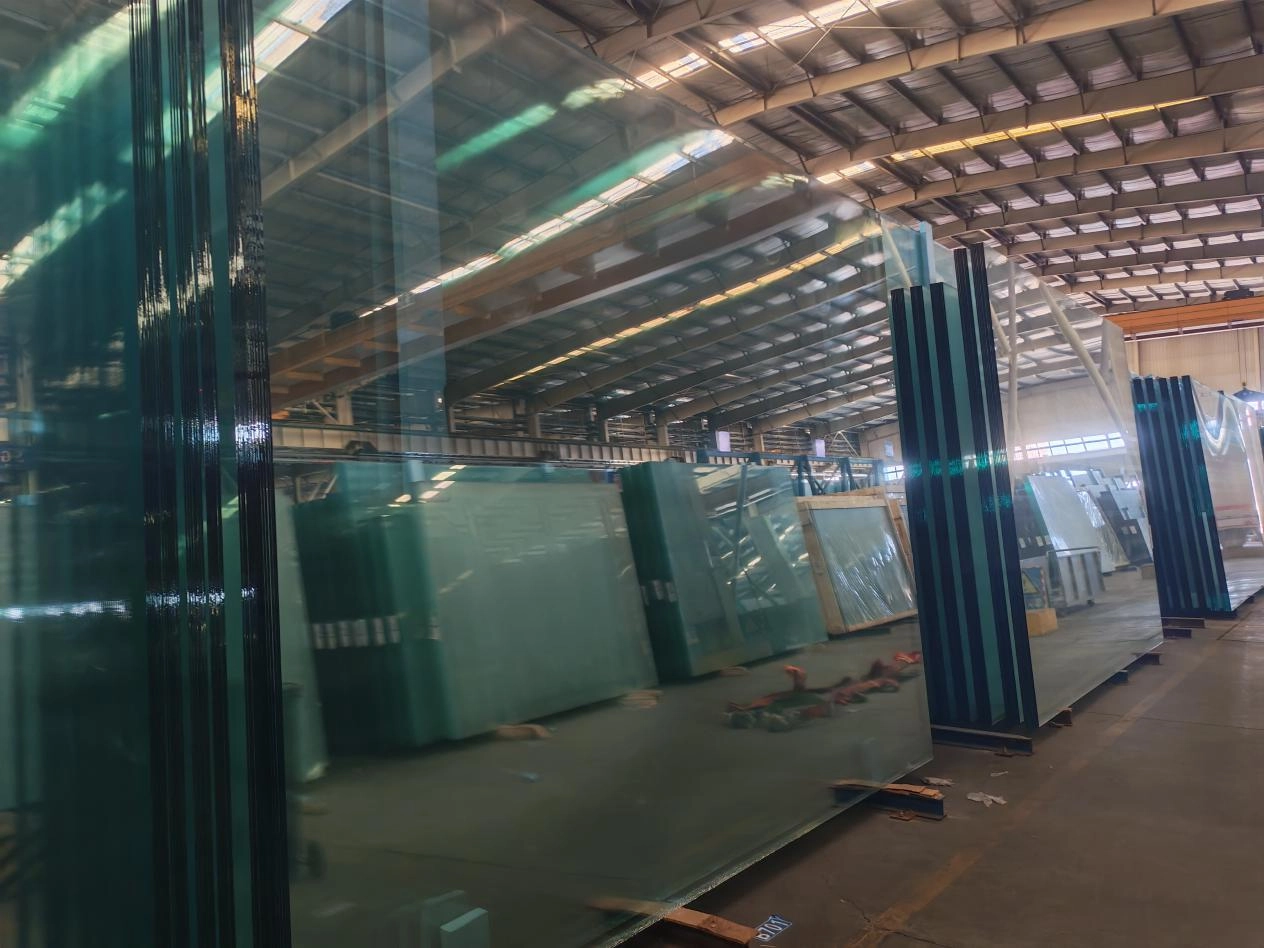
Focus aggressively on Nickel Sulfide (NiS) inclusions when evaluating raw stock. These microscopic impurities originate in the float batch during primary manufacturing. Over time, they undergo a natural phase change from an alpha state to a beta state, physically expanding in volume. This expansion causes delayed spontaneous breakage in tempered panels months or even years after building installation. Evaluating the raw material purity heavily limits this dangerous liability. When selecting a reliable substrate for tempering, verify the supplier's raw batch testing history. Secondary Heat Soak Testing (HST) documentation becomes legally required for high-risk structural applications to force these latent failures inside the factory rather than on the facade.
Orientation matters immensely on the production line. You must actively manage the tin side versus the air side of the glass. Identify the tin side using specialized handheld UV light detectors before operators feed sheets onto the loading bed. The tin side absorbs radiant heat differently than the air side and interacts chemically with the rotating ceramic furnace rollers. Incorrect orientation triggers severe, uncorrectable roller wave distortion. It also causes irreversible top-surface scratching and hazing during the intense heating cycle.
Internal stress limits dictate the final geometry and structural integrity of the panel. Uneven annealing during the primary float process locks residual stress deep within the glass structure. Quality control inspectors use polariscopes to visualize these stress patterns. Once you heat and rapidly cool this glass during tempering, the hidden stress releases unevenly across the surface area. This leads to severe physical warping. Uncorrectable bow and warp post-tempering completely ruin the panel for subsequent structural glazing or flat lamination processes.
Edge flaw tolerance constraints cannot be ignored by operators under any circumstance. Edge-work remains absolutely mandatory before tempering. Facilities choose between arrissing (seaming), flat grinding, or full polishing based on the final application requirements. Pre-existing deep edge damage in the raw substrate often bypasses these basic edge preparations. If a vent exceeds the physical grinding depth of your diamond wheels, it enters the furnace entirely intact. The severe thermal shock immediately exploits this weakness, triggering explosive furnace breakage and halting the line.
Surface cleanliness absolutely dictates chemical readiness for lamination. Residual tin from the float bath degrades adhesion strength over time. Cutting oils, fingerprint oils, and separator powders act as physical barriers. These hidden contaminants block the PVB or SGP interlayer from physically bonding to the glass structure at a molecular level. You must define precise water break test metrics on the floor to ensure proper washing. Alternatively, use dyne pens or contact angle measurements to verify surface energy immediately post-washing. Proper RO washing systems guarantee the surface remains entirely pristine prior to entering the climate-controlled cleanroom.
Flatness and bow tolerances impact lamination pressure dynamics directly inside the autoclave. Localized warp creates physical gaps between the two bonded plies. Roller wave or intrinsic bow causes severe "bridging" during assembly. The process then requires excessive autoclave pressure (often exceeding 13 bar) to force the rigid glass layers together. This abnormally high pressure increases the risk of edge-pinch defects. The glass physically pinches the interlayer too thinly at the edges, inviting moisture ingress and delamination later in the product's life.
Handling coated and Low-E substrates requires specialized mechanical steps prior to lamination. Precise edge-deletion on coated raw glass for laminating is non-negotiable. Using specialized abrasive wheels, operators must strip the microscopic metallic coating off the perimeter of the glass. The interlayer must bond directly to the bare glass surface. If the interlayer attempts to bond directly to the metallic low-E coating, the adhesion fails structurally under load. This specific failure allows moisture ingress and triggers rapid, irreversible delamination around the entire perimeter of the insulated unit.
Iron content dramatically changes your daily quality control needs. Standard clear float glass features a distinct green edge tint due to inherent iron oxide in the silica sand mix. This green tint multiplies visually when stacking thick laminated layers for ballistic or structural glass. In contrast, low-iron variations provide exceptional, neutral light transmission. However, this extremely high optical clarity heavily exposes trace interlayer imperfections. Minor scratches, floating lint, or microscopic dust particles become glaringly obvious to the naked eye. You must enforce far stricter cleanroom handling protocols, mandatory static-control garments, and continuous HEPA filtration monitoring for low-iron variations.
Logistics heavily influence the final yield of large-format glass operations. Storing and moving massive jumbo float glass stock (PLF/DLF sizes) introduces immense physical hazards to both operators and the materials themselves. You must mandate strict structural engineering requirements for A-frames to prevent metal racking under sheer tonnage. Vacuum lifter suction cup capacities require daily testing and mechanical load verification. Automated overhead loading systems drastically reduce manual handling injuries and completely minimize microscopic edge chipping during table transfer operations.
Moisture causes severe, irreversible chemical degradation on stored glass. Storing glass packs in humid environments without proper desiccant initiates aggressive sodium leaching. This chemical reaction pulls sodium ions to the glass surface, creating a cloudy, etched stain known in the field as "weathering." You cannot simply wash off severe weathering; the glass surface permanently degrades. Mitigation relies entirely on strict, disciplined inventory management practices.
Implement strict First-In-First-Out (FIFO) stock rotation to logically prevent aging material from sitting in the warehouse.
Utilize climate-controlled warehousing to maintain relative humidity strictly below 50% year-round.
Ensure protective interleaving powder (a specific blend of Lucite beads and adipic acid) is evenly distributed between every single sheet.
Track the exact shelf-life of every single crate using barcode scanners and digital inventory tags.
Pre-processing washing protocols often rescue slightly affected materials before cutting. Define strict baseline requirements for your reverse-osmosis (RO) water washing systems. Set specific electrical conductivity targets (strictly under 20 µS/cm) for the final rinse water zone. High-quality RO washing effectively removes minor surface alkalis before they permanently etch the glass structure. This specific step rescues slightly weathered stock before secondary processing begins, salvaging costly material that would otherwise hit the dumpster.
You must evaluate batch-to-batch consistency rigorously before signing any supply contracts. Audit the supplier’s Statistical Process Control (SPC) data regularly. Request their internal Cpk (Process Capability Index) values. This rigorous audit ensures the raw material strictly meets your internal production capabilities continuously. Review their long-term control charts specifically for thickness variation, optical millidiopter distortion, and primary annealing stress limits.
Certifications physically prove operational compliance on a global scale. Map substrate quality against established secondary processing architectural standards. Demand verifiable compliance with ASTM C1036 for raw materials. Require strict adherence to ASTM C1048 for heat-treated glass outputs. Verify EN 12150 standards for tempered elements and EN 14449 for laminated architectural products. Without these documents on file, you assume total liability for facade failures.
Traceability accelerates defect resolution and operational cost recovery. Assess the supplier's barcode or automated laser marking systems. When a massive panel fails mid-production, you need to trace it back to the exact float batch, production date, and shift immediately. A robust claims process ensures that supplier-born manufacturing defects do not drain your internal operational budget or aggressively delay your outbound shipments to the job site.
Audit Category | Verification Method | Red Flag Indicators |
|---|---|---|
Annealing Consistency | Review of internal polariscope testing logs | High residual stress variation across the web width. |
Packaging Integrity | Physical inspection of inbound crates | Insufficient desiccant; unevenly applied interleaving powder. |
Dimensional Accuracy | Micrometer logs and automated laser scanning | Thickness variations exceeding ±0.2mm consistently. |
Traceability | Scan rate of edge laser marks | Missing batch codes; inability to trace failed cullet to specific runs. |
Request full trial crates from new suppliers to run internal destructive testing and evaluate real-world edge-work performance on your specific machines.
Rigorously analyze furnace yield data against specific glass batch numbers to identify hidden, recurring annealing flaws.
Upgrade inbound inspection protocols immediately to include UV tin-side detection and zebra board optical distortion mapping on the loading dock.
Implement strict digital shelf-life tracking for all jumbo stock to eliminate weathering rejections entirely before cutting operations even begin.
A: Suitable glass requires highly uniform thickness, critically low residual internal stress, and a defect-free surface. It must physically withstand the aggressive thermal shock of tempering furnaces and the intense mechanical pressure of laminating autoclaves without breaking or distorting.
A: Industry standards dictate viewing the glass vertically from a distance of exactly 3 meters. Maintain a strict 90-degree viewing angle to the surface. Conduct the inspection under uniform ambient factory lighting, strictly avoiding direct sunlight glare or highly focused spotlights.
A: Clear glass contains iron oxide, creating a green edge tint that visually multiplies in thick laminated layers. Low-iron glass offers completely neutral light transmission. However, low-iron glass requires stricter cleanroom handling because its extreme optical clarity easily exposes trace interlayer imperfections and dust.
A: The tin side absorbs radiant heat differently and interacts chemically with ceramic furnace rollers. Identifying and orienting the tin side correctly facing down is critical to avoid severe roller wave distortion, top-surface haze, and physical scratching during the rapid heating cycle.
A: Micro-fissures and sharp vents generated from the raw cutting process act as massive stress concentration points. Heating the glass without seaming, arrissing, or grinding these damaged edges inevitably causes explosive thermal breakage inside the tempering furnace.
A: Standard industry tolerances typically sit at ±0.2mm for 3mm to 6mm glass gauges. Exceeding these strict physical limits disrupts precise furnace heating profiles and causes highly uneven nip-roller pressure during lamination, leading directly to edge-pinch defects and subsequent delamination.


