Views: 0 Author: Site Editor Publish Time: 2026-06-30 Origin: Site


High-density urban development and open-plan commercial spaces have made engineered noise mitigation a baseline requirement. It is no longer just a premium add-on for high-end projects. Excessive urban noise constantly infiltrates interior environments, creating massive disruptions. Standard Insulating Glass Units (IGUs) offer excellent thermal efficiency but frequently fail at acoustic isolation. This failure happens due to the coincidence effect. In this scenario, monolithic glass vibrates at the exact same frequency as incoming sound. Upgrading to acoustic laminated glass provides measurable, verifiable sound dampening. This guide breaks down how interlayer technologies block unwanted noise completely. We show you how to navigate acoustic ratings accurately. Finally, you will learn to specify the right configuration for complex environmental noise challenges.
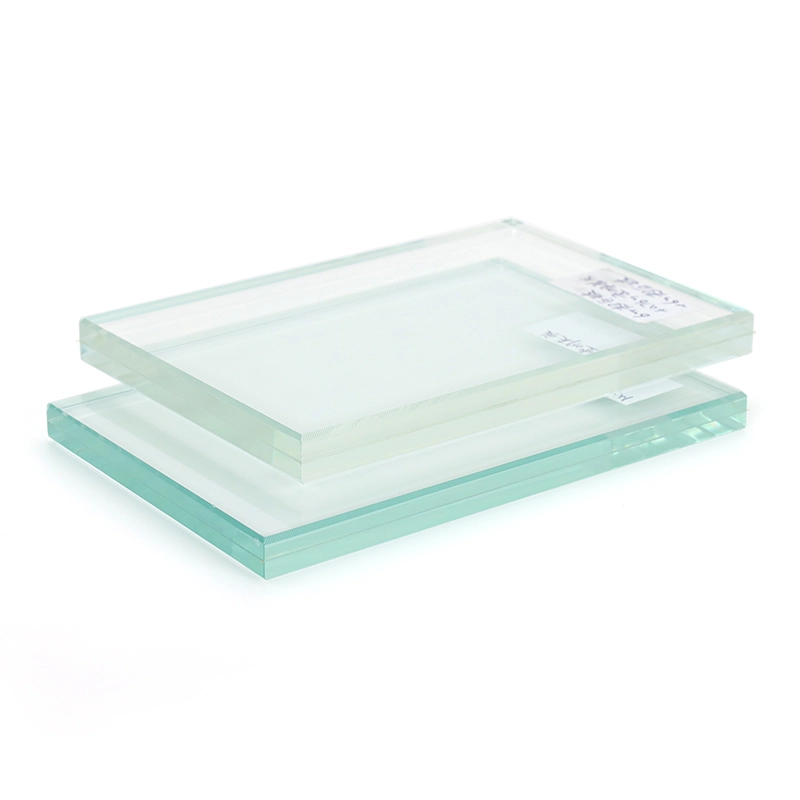
Acoustic laminated glass utilizes a specialized viscoelastic core to absorb sound energy, outperforming standard monolithic or standard laminated glass.
STC vs. OITC: STC ratings measure interior noise (speech, office sounds), while OITC is critical for exterior low-frequency noise (traffic, aviation).
System Dependence: Even the highest-rated STC rated glazing will fail if installed in a poorly sealed or acoustically weak framing system.
Configuration Matters: Maximizing noise reduction requires combining a PVB acoustic interlayer with asymmetrical glass pane thicknesses and optimized airspaces.
To understand modern acoustic engineering, we must first look at how standard monolithic glass fails under pressure. For decades, architects relied on a simple principle called the Mass Law. This physical law states that doubling the mass of a barrier will theoretically reduce sound transmission by about 6 decibels (dB). In practice, this approach yields terrible diminishing returns.
Simply making monolithic glass thicker adds prohibitive structural weight to a facade. Frame assemblies cannot support massive glass panels without heavy reinforcement. Furthermore, brute-force mass does not solve the underlying physical weakness of standard glass. It introduces a dangerous vulnerability known as the coincidence dip.
Every solid material has a natural frequency where it resonates easily. For standard monolithic glass, this resonance occurs between 2000 Hz and 4000 Hz. Unfortunately, human hearing is uniquely sensitive within this exact range. Sirens, loud human speech, and harsh mechanical whines fall right into this spectrum. When these sound waves hit a standard glass pane, the glass vibrates along with them. The pane practically passes the sound energy straight into the room.
Symmetrical double-glazing amplifies this failure. When you use two panes of the exact same thickness in a standard IGU, they share the same resonant frequency. They vibrate perfectly in sync, creating a clear pathway for mid-to-high frequency noises. Upgrading to engineered noise control glass solves this structurally. It disrupts soundwave transmission efficiently. You avoid the need for massively thick monolithic panes while achieving superior acoustic isolation.
The secret to modern sound mitigation lies inside the glass itself. Instead of relying entirely on mass, engineers employ viscoelastic damping. They place a specialized PVB acoustic interlayer (Polyvinyl Butyral) directly between two panes of glass. This core acts as a constrained damping layer.
When sound waves strike the exterior glass surface, they create kinetic vibration. As this vibration travels into the viscoelastic core, the PVB layer resists the movement. The material shears and stretches on a microscopic level. This friction converts the acoustic energy into tiny, undetectable amounts of heat energy. The heat dissipates safely, and the sound wave loses its power before it can exit the inner glass pane.
You must note the crucial difference between standard safety glass and true acoustic configurations. Standard safety laminated glass uses regular PVB. It offers some acoustic benefit over raw monolithic glass. However, a dedicated three-layer acoustic PVB core is fundamentally different. It features a softer inner core flanked by two stiffer outer layers. This specific tri-layer setup provides a distinct 2-3 dB improvement over standard PVB. More importantly, it directly neutralizes the coincidence dip, flattening out the acoustic weakness at higher frequencies.
We often face concerns about material compromise. Does adding a complex plastic core ruin the window? No. Acoustic interlayers do not sacrifice visual clarity. They offer the exact same high light transmittance as standard laminates. They block up to 99% of harmful UV rays. They also fully comply with strict safety glazing codes for impact resistance.
Performance Comparison of Glazing Cores | |||
Glass Configuration | Damping Mechanism | Coincidence Dip Control | UV Blockage |
|---|---|---|---|
Standard Monolithic | Mass only | Poor | Minimal |
Standard Laminated (PVB) | Basic Constrained Layer | Moderate | Up to 99% |
Acoustic Laminated (Tri-layer PVB) | Advanced Viscoelastic Damping | Excellent | Up to 99% |
Industry professionals rely on strict standardized metrics to quantify noise reduction. You cannot specify glass based on feelings or vague promises. You must rely on verifiable testing data. Sound Transmission Class (STC) represents the most common metric used in North America.
We use STC to measure mid-to-high frequency noises. It excels at evaluating interior environments. It accounts for human voices, ringing telephones, and typical office equipment. Standard 1/4" monolithic glass provides a baseline STC of roughly 31. This blocks normal conversation, but loud speech remains completely audible. By integrating an acoustic core, proper STC rated glazing configurations can reach impressive heights of STC 40 to 50+. At STC 50, even loud, strained shouting becomes faintly heard or entirely unintelligible.
However, STC has a massive blind spot. It largely ignores the low-frequency rumble of the outside world. This is where the Outdoor-Indoor Transmission Class (OITC) becomes mandatory. OITC evaluates low-frequency sounds that plague exterior building envelopes. Heavy truck traffic, idling diesel trains, and industrial HVAC rumble operate at frequencies that STC testing simply overlooks.
You must match your metrics carefully to your specific use cases to avoid costly failures.
Interior Partitions: Focus heavily on STC. Conference rooms, executive offices, and private medical exam rooms deal primarily with voice transmission. A high STC rating ensures complete speech privacy.
Exterior Facades: Optimize strictly for OITC. Urban hotels, airport lounges, and downtown residential towers face constant low-frequency assault. A high OITC rating guarantees the glass will block the heavy rumble of street-level activity.
Real-World Perception of STC Ratings | ||
STC Rating | Acoustic Privacy Level | Real-World Example |
|---|---|---|
STC 30-35 | Poor | Loud speech is understood easily. Standard windows. |
STC 35-40 | Moderate | Loud speech is heard but unintelligible. Basic upgrades. |
STC 40-45 | Good | Loud speech is faintly heard. Private office standard. |
STC 45-50+ | Excellent | Very loud sounds are faintly heard. Premium acoustic walls. |
While the industry frequently uses the popular term soundproof glass panel, we must clarify a technical reality. No glass configuration is 100% soundproof. Sound is highly invasive energy. Our primary goal is sound-dampening. We engineer panels to drop noise to comfortable, acceptable decibel levels where human distraction disappears.
Achieving this requires specific, intentional configuration. You cannot just throw random thick glass into a frame. The most effective strategy involves asymmetrical glass thickness. You build an IGU using two completely different thicknesses of glass. For example, you might pair a 1/4" pane on the outside with a 3/8" laminated pane on the inside. Because these panes have different physical masses, they resonate at completely different frequencies. One pane blocks the frequencies that the other pane lets through. This creates a much broader, comprehensive spectrum of noise reduction.
Next, you must prioritize airspace optimization. The air gap between panes acts as a massive shock absorber for sound waves. A standard IGU might use a narrow gap to save space. For serious acoustic performance, increasing the airspace improves dampening dramatically. We recommend a minimum 1/2" airspace for standard commercial applications. If you face extreme noise, such as a recording studio or airport facade, secondary glazing is required. Secondary glazing introduces massive air spaces ranging from 2 to 4 inches, stopping sound waves cold.
Finally, modern building codes require strict thermal integration. Acoustic glass does not exist in a vacuum. It must perform thermally. You can seamlessly combine acoustic laminates with Low-E (low-emissivity) coatings. You can also fill the optimized airspace with heavy argon gas. Argon improves both the U-value (thermal resistance) and adds a marginal bump to acoustic dampening. This allows your assembly to meet strict energy codes and acoustic targets simultaneously.
Select an asymmetrical glass pane pairing to break resonance.
Ensure at least one pane includes a tri-layer acoustic PVB core.
Maximize the airspace cavity between the panes (minimum 1/2").
Apply Low-E coatings to the appropriate surface for thermal control.
Fill the cavity gap with argon gas to boost energy efficiency.
A brilliantly engineered glass panel will fail instantly if installed improperly. Sound acts remarkably like water. It always travels the path of least resistance. We call these weaknesses flanking paths. Acoustic glass cannot compensate for unsealed mullions. It will not fix weak wall assemblies, and it certainly cannot stop flanking noise traveling freely over drop ceilings or through shared ventilation ducts.
Frame resonance presents a major risk during implementation. Buyers often confuse testing data. There is a vast difference between the STC of the center-of-glass and the STC of the total window assembly. Glass testing occurs in a perfect laboratory. Real-world installation involves metal frames. If you install heavy acoustic glass into cheap, hollow, uninsulated aluminum frames, the frame will vibrate aggressively. The frame itself will transmit the noise into the room, dropping the overall OITC and STC ratings of the total assembly significantly.
Weight considerations are equally critical. You must respect the physical reality of these materials. Laminated glass is exceptionally heavy. Adding thick, asymmetrical panes pushes the dead load far beyond standard IGU weights. Structural hardware, friction hinges, and tracking systems must be explicitly rated for this increased mass. If you use standard residential or light-commercial hardware, the hinges will sag, seals will break, and the acoustic integrity of the system will collapse within months.
Relying solely on center-of-glass STC numbers without testing the full frame assembly.
Using standard hollow aluminum extrusions without acoustic dampening fills.
Failing to specify heavy-duty hinges to support the severe dead load of laminated units.
Ignoring flanking paths through perimeter caulking and weak wall joints.
Achieving optimal acoustic privacy and environmental comfort requires deliberate engineering. You must move far beyond the outdated reliance on standard glazing and brute-force monolithic mass. True noise mitigation requires leveraging specific PVB interlayers alongside strategic asymmetrical glass design. By understanding the critical differences between STC and OITC, you can target the exact frequency ranges that plague your environment.
Your next step is to move away from theoretical STC targets and demand verifiable specifications. Do not accept vague promises about sound reduction. Ask for precise laboratory testing data that reflects your exact proposed frame and glass combination.
We encourage you to take proactive action on your current designs. Request a technical consultation with an acoustics expert. Download certified acoustic performance testing data and specification sheets. Finally, submit your architectural plans to request a project-specific IGU configuration quote tailored strictly to your environmental noise challenges.
A: It depends heavily on your current frame's pocket depth and weight capacity. Laminated acoustic units are thicker and significantly heavier than standard glass. If your frame cannot hold the dead load, the hardware will fail. Often, secondary glazing—adding an interior acoustic window alongside the existing window—is a safer, more viable retrofit solution.
A: Standard high-performance acoustic IGUs typically peak around STC 45 to 50. Pushing higher into the STC 50-60+ range requires specialized configurations. You cannot achieve this with a single IGU. It typically demands specialized secondary glazing setups featuring massive, decoupled air gaps of 2 to 4 inches.
A: Yes. The same viscoelastic PVB interlayer used for superior sound control inherently provides excellent forced-entry resistance. Even if an intruder strikes the window and shatters the rigid outer glass, the tough polymer core holds the broken shards tightly together, keeping the barrier intact.


