Views: 0 Author: Site Editor Publish Time: 2026-06-03 Origin: Site


When ordinary glass is simply not thick enough — when engineers need a panel that resists deliberate forced entry, spans floors without visible support, withstands extreme wind loads on a high-rise facade, or survives the kind of blunt force that would shatter anything lighter — the conversation turns to jumbo-size laminated glass that reaches the 21.5mm toughened specification. This is the thickest standard laminated glass configuration available from most manufacturers, and its mass, stiffness, and laminated safety construction make it the preferred choice for the most demanding applications in modern architecture.
21.5mm toughened laminated glass sits at the intersection of structural engineering and security glazing. Its performance envelope covers applications that lighter glass types cannot safely handle: cantilevered glass floors, structural balustrades with minimal hardware, bank teller windows designed to resist firearms and sustained manual attack, and facade panels that must survive hurricane-force wind debris. This article explains what makes 21.5mm toughened laminate technically different from thinner options, where it is specified by code or best practice, and what buyers and specifiers need to verify when sourcing this product.
21.5mm toughened laminated glass is a composite construction typically built from two 10mm toughened glass plies bonded with a 1.5mm interlayer. The standard configuration is:
10mm toughened glass / 1.5mm PVB / 10mm toughened glass = 21.5mm total (standard)
10mm toughened glass / 1.5mm SGP / 10mm toughened glass = 21.5mm total (high-performance)
Some manufacturers produce 21.5mm from three plies — for example, 8mm + 8mm + 4mm with two interlayers — to achieve specific acoustic or ballistic performance targets. The two-ply, 10+1.5+10 construction is the most structurally efficient because it maximizes the glass thickness on each ply, and 10mm is a well-established temperable thickness that produces consistent surface compression during heat treatment.
The 10mm toughened plies deliver approximately four to five times the flexural strength of annealed 10mm glass. When combined with the interlayer, the resulting 21.5mm laminate achieves an in-plane stiffness roughly 40–50% higher than a 17.5mm laminate and 70–80% higher than a 13.5mm laminate. That stiffness translates directly into wider spans, higher load capacity, and reduced deflection under live and wind loads.
At 10mm, the tempered plies offer a meaningful step change in load performance compared with 8mm or 6mm tempered glass. The additional 2mm of glass per ply adds mass (approximately 5 kg/m² per ply, so the full laminate weighs around 52 kg/m² including both plies and interlayer) and bending stiffness. In structural glazing applications — glass floors, cantilevered balustrades, overhead canopies — the stiffness-to-weight ratio of the 10mm ply configuration is well understood by structural engineers and referenced in design guides published by organizations such as the Glass Association of North America (GANA) and the British Standards Institution.
It is worth noting that 10mm is approaching the upper practical limit for standard vertical tempering furnaces. Not all manufacturers can temper 10mm glass consistently, particularly in widths above 2,000mm. Rider Glass operates tempering furnaces rated for 10mm glass up to 3,300mm wide, enabling jumbo-format 21.5mm laminates that would be impossible from suppliers with smaller furnace dimensions.
Above 21.5mm, laminated glass constructions become increasingly specialized. At 25mm or 27mm total thickness, the weight exceeds 60–65 kg/m², which imposes significant demands on framing hardware, structural support, and installation methodology. The lamination process also becomes more challenging — larger autoclave equipment is required, and the heat-pressure cycle must be carefully managed to avoid delamination in thick multi-ply constructions.
For most high-security and structural applications, 21.5mm represents the practical optimum: thick enough to meet demanding load and attack-resistance requirements, yet producible at reasonable yields and within standard manufacturing equipment envelopes. It is telling that building codes and test standards that specify "thick laminated glass" for security or structural applications most frequently reference configurations in the 17.5mm to 21.5mm range.
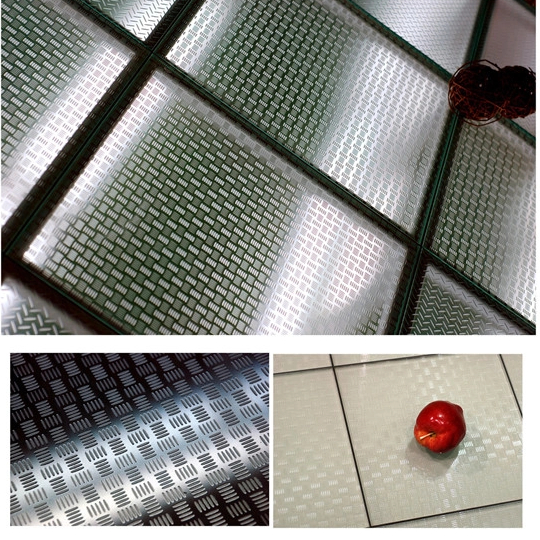
The primary benefit of 21.5mm toughened laminated glass is its structural capability. At 21.5mm total thickness with 10mm tempered plies, the panel achieves load capacities that allow engineers to specify glass floors with spans of 1,500mm or more without intermediate supports, cantilevered balustrade panels exceeding 1,000mm from the fixing point, and facade panels that survive wind pressures of 2.5–5.0 kPa depending on dimensions and framing conditions.
For glass floor applications specifically, the relevant standard in North America is OSHA 1910.25, which defines requirements for glass floor panels in commercial buildings, and the International Building Code (IBC) Section 2407, which addresses glass in guards and handrails. European guidance comes from EN 13474 and the UK Floor Glass Advisory Group guidance documents. A 21.5mm laminate with SGP interlayer is typically specified for glass floor panels because it maintains load-carrying capacity after glass breakage — a critical safety requirement in floor applications where falling through the panel would be catastrophic.
At 21.5mm with toughened plies and SGP interlayer, the laminate begins to approach the performance envelope of dedicated ballistic glass — though for firearms resistance, thicker specialized constructions (typically 25mm+) with polycarbonate or polyurea layers are required. For manual forced-entry resistance, 21.5mm toughened laminate with SGP interlayer can achieve European WK5 or WK6 ratings under EN 356 (manual attack test), which involve sustained attack with axes, hammers, and pry bars for 20–60 seconds.
Bank teller windows, jewelry store display cases, government facility facade panels, and control rooms in hazardous environments all specify 21.5mm or equivalent thick laminate constructions for this reason. The mass of the glass makes it physically difficult to breach quickly, and the SGP interlayer maintains structural integrity even when the glass itself is cracked, preventing the kind of rapid breakthrough that opportunistic attackers seek.
At STC ratings of 42–46 dB for a standard 21.5mm PVB laminate, this thickness provides the highest acoustic isolation of any commonly available laminated glass configuration. The combination of two 10mm glass masses with a viscoelastic interlayer creates a formidable barrier against low-frequency noise — the hardest frequency range to attenuate — making 21.5mm laminate the preferred choice for recording studio interfaces, building facades in airport noise zones, and conference rooms requiring complete speech privacy.
For extreme acoustic applications, a 21.5mm laminate can be paired with a secondary glass pane in a double-glazed assembly, pushing the combined STC rating to 52 dB or higher — comparable to a solid concrete wall of significant thickness.
In hurricane-prone regions of the United States (Florida, Gulf Coast), the Caribbean, and Southeast Asia, building codes mandate glazing that can survive impact from wind-borne debris. Large missiles (a 2 × 4 timber plank propelled at high speed) and small missiles (gravel) are the standard impact projectiles. A 21.5mm toughened laminate — particularly with SGP interlayer — can be tested and certified to ASTM E1996 and Miami-Dade County Notice of Acceptance (NOA) standards for hurricane impact resistance, making it suitable for use in critical facilities such as hospitals, emergency response centers, and schools in high-velocity hurricane zones.
Contemporary high-rise facades increasingly use thick laminated glass to achieve uninterrupted sight lines across large spans. At 21.5mm, the panel stiffness is sufficient to maintain facade flatness under wind pressures that would cause visible bowing or vibration in thinner panels. The jumbo-format capability — Rider Glass produces 21.5mm toughened laminate panels up to 3,300mm × 6,000mm — enables architects to reduce the number of mullions, creating cleaner exterior elevations with fewer visual interruptions.
In real projects, this approach has been applied in tower developments across Southeast Asia, the Middle East, and North America where wind loads on tall buildings impose significant demands on facade panel stiffness. The 21.5mm laminate with SGP interlayer is particularly favored in these applications because the SGP interlayer maintains facade integrity even if one or both glass plies are damaged during construction or maintenance.
Glass balustrades in commercial and high-end residential buildings frequently specify 21.5mm toughened laminate when the design calls for minimal hardware — frameless or patch-fit balustrade systems where the glass panel carries its own load without continuous bottom rails. The panel thickness provides the bending stiffness needed to resist live loads (people leaning or falling against the railing) without excessive deflection.
Glass stair treads and landing platforms take this further: the 21.5mm laminate must support foot traffic loads while maintaining a transparent appearance. SGP interlayer is strongly preferred for stair applications because it maintains the load path after breakage — a broken laminate with SGP interlayer tends to remain in place, whereas a PVB laminate may allow enough deflection to create a fall-through hazard even while fragments are held.
Glass floor panels and skylights represent some of the most demanding applications for 21.5mm toughened laminated glass. The floor must support concentrated loads (a person standing on high heels, furniture legs, shelving), distributed loads (crowds), and impact loads (dropped objects) while maintaining structural integrity after breakage. The SGP interlayer is essentially mandatory for floor applications because its post-breakage stiffness preserves the load path in ways that PVB cannot match. Rider Glass's glass floor solutions showcase the structural capabilities of thick SGP laminate in architectural floor and stair tread installations.
Skylights add the complication of thermal cycling and potential thermal stress in the glass. The tempering of each ply in a 21.5mm laminate provides residual compressive stress that resists thermal shock — the glass can withstand larger temperature differentials between the center and the edge without cracking, which is particularly important for south-facing skylights that experience intense solar heating.
The classic image of a bank teller window — a thick glass panel separating customers from cashiers — is built around 21.5mm or equivalent laminated construction. These systems are designed to resist not just manual attack but also firearms discharge and explosive breach attempts. A complete security glazing system includes the laminated glass panel, a tested frame and fixing assembly, and often a voice transmission system to allow communication across the barrier.
Beyond banking, high-value retail — currency exchange offices, precious metals dealers, ticket outlets in transit hubs — uses similar thick laminate constructions to protect staff and cash handling operations. The investment in 21.5mm laminate is justified by the reduction in robbery risk and the insurance premium reductions that often accompany evidence of hardened glazing.
Choosing between 21.5mm and thinner alternatives depends on whether the project actually needs the additional thickness. Here is a direct comparison:
Thickness | Ply Construction | STC Rating | Load Capacity | Primary Use |
|---|---|---|---|---|
6.4mm lam. | 3+0.4+3 annealed | 33–35 dB | Minimal structural | Furniture, partitions |
8.8mm lam. | 4+0.8+4 tempered | 35–37 dB | Light structural | Res. balustrades, windows |
13.5mm lam. | 6+1.5+6 tempered | 37–40 dB | Moderate structural | Commercial balustrades, facades |
17.5mm lam. | 8+1.5+8 tempered | 38–42 dB | High structural | Facades, security, soundproofing |
21.5mm lam. | 10+1.5+10 tempered | 42–46 dB | Maximum structural | Floors, banks, high-security, railings |
The step from 17.5mm to 21.5mm is significant: approximately 35% more mass, 40–50% higher stiffness, and 4–6 dB better acoustic performance. That difference justifies the premium in applications where the additional performance is genuinely needed. For general facade use where 17.5mm already exceeds requirements, stepping up to 21.5mm adds cost and weight without proportional benefit.
Not all laminated glass manufacturers can temper 10mm glass consistently, particularly at jumbo widths. Before placing an order, confirm that the supplier has tempering furnaces rated for 10mm glass and that the tempering quality meets EN 12150-1 or ASTM C1048 standards. Ask for optical stress measurement (polarscope) readings or surface compression test reports for each batch.
If your application requires SGP interlayer — and most structural and security applications should at least evaluate SGP — confirm that the supplier can source genuine Kuraray SentryGlas Plus interlayer and has the lamination process parameters (temperature, pressure, dwell time) optimized for SGP rather than just PVB. SGP requires higher autoclave pressure during lamination, and not all lamination equipment is rated for it.
For security applications, request third-party test reports from accredited laboratories. In the United States, Underwriters Laboratories (UL) and the American Testing Laboratory (ATL) are recognized testing bodies. In Europe, test reports from notified bodies under the Construction Products Regulation (CPR) are required for CE marking. The test reports should reference the exact laminate construction you are specifying, not a similar but non-identical product.
Large-format 21.5mm toughened laminated glass carries a significant cost premium over standard sizes due to the rarity of manufacturers with the necessary equipment. Rider Glass produces jumbo-format 21.5mm laminate in sizes up to 3,300mm × 6,000mm — among the largest available in the market. Competitor C may need to cut 21.5mm panels from smaller tempered sheets, limiting maximum sizes and adding more joints to the installation.
Rider Glass stands out in the market for thick laminated glass production through a combination of manufacturing capability, quality control, and export experience that commodity producers simply cannot match.
The tempering and lamination equipment at Rider Glass is specifically rated for 10mm glass and 21.5mm laminate constructions at jumbo widths — a capability that eliminates the supply constraints that plague projects sourcing from manufacturers with smaller furnaces. Rider Glass's tempered glass production lines handle the full range of temperable thicknesses from 4mm through 12mm, enabling consistent quality across all panel sizes in a mixed-order project. That means fewer joints, cleaner facade designs, and faster installation for architects and contractors working with large-format panels.
The company stocks both PVB and SGP interlayers in the grades and thicknesses needed for 21.5mm constructions, enabling short lead times on standard specifications. Competitor A typically carries only PVB options in this thickness, which means projects requiring SGP must accept longer lead times or source from multiple suppliers.
Custom thickness combinations — whether a project needs three-ply laminate for specialized acoustic performance or a non-standard interlayer thickness for a specific ballistic rating — are available from Rider Glass without the minimum order quantities or tooling charges that many competitors impose. This flexibility supports projects with unique requirements that fall outside the standard product range.
For international projects, Rider Glass's logistics team manages the documentation, packaging, and shipping coordination required to deliver 21.5mm toughened laminated glass to project sites worldwide. The company has supplied thick laminated glass to projects in North America, Europe, the Middle East, and Southeast Asia, with documented experience navigating the customs, packaging, and logistics challenges specific to heavy, fragile, high-value cargo.
A: The standard construction is two 10mm thermally tempered glass plies bonded with a 1.5mm PVB or SGP interlayer, for a total nominal thickness of 21.5mm. Some manufacturers offer three-ply variants for specialized acoustic or ballistic requirements, but the two-ply, 10+1.5+10 configuration is the most structurally efficient and widely available.
A: No glass product is truly bulletproof. 21.5mm toughened laminate with SGP interlayer can resist certain handgun calibers under specific test conditions, but dedicated ballistic glass with polycarbonate or polyurea layers (typically 25mm+ thick) is required for rifle-resistance. For forced-entry resistance to hand tools (hammers, axes, pry bars), 21.5mm laminate with SGP can achieve WK5 or WK6 ratings under EN 356, making it suitable for bank and high-security applications. Always specify to the relevant test standard for your threat profile.
A: Yes, it is one of the most common specifications for glass floor panels. The 10mm tempered plies provide the bending strength and stiffness to support live loads, and the SGP interlayer maintains the load path after glass breakage — critical for floor safety. SGP is essentially mandatory for glass floor applications; PVB interlayer does not provide sufficient post-breakage stiffness to prevent a fall-through hazard. Design should follow OSHA 1910.25, IBC Section 2407, and applicable local standards.
A: A standard 21.5mm laminate with PVB interlayer achieves STC 42–46 dB. With SGP interlayer and optimized acoustic construction, ratings of 44–48 dB are achievable. This is the highest acoustic performance of any commonly available laminated glass configuration, making it ideal for recording studios, airport building facades, and conference rooms requiring speech privacy.
A: Rider Glass produces 21.5mm toughened laminated glass panels up to 3,300mm × 6,000mm in jumbo format. The actual maximum size depends on the tempering furnace dimensions and lamination press capacity. Confirm with your supplier that their equipment can handle your required dimensions — many manufacturers with smaller furnaces simply cannot produce 21.5mm laminate at jumbo widths regardless of what they claim.
A: When tested with a proper framing system, 21.5mm toughened laminate with SGP interlayer can achieve Large Missile Impact (LMI) ratings under ASTM E1996 and Miami-Dade County NOA protocols, making it suitable for hurricane-prone regions. The specific rating depends on the complete glazing assembly — glass, interlayer, and frame — not just the glass alone. Always verify that the framing system has been tested with the same glass specification.
A: SGP (SentryGlas Plus) offers approximately five times the tear resistance and twice the structural stiffness of PVB. In 21.5mm laminate, this translates to better post-breakage stiffness (critical for floors and balustrades), higher impact resistance, and better edge stability in humid or coastal environments. PVB provides excellent optical clarity and acoustic damping at lower cost. Choose SGP for structural, floor, or high-security applications; choose PVB for acoustic-focused applications where post-breakage stiffness is less critical.
21.5mm toughened laminated glass is the heavyweight champion of the laminated glass family. Its combination of maximum structural stiffness, superior acoustic performance, security-grade impact resistance, and hurricane survivability makes it the default choice for the most demanding applications in contemporary architecture.
Whether you are engineering a cantilevered glass floor in a luxury hotel atrium, specifying forced-entry rated glazing for a financial institution, or designing a high-rise facade that must survive hurricane debris impact, 21.5mm toughened laminate with SGP interlayer provides the performance envelope that thinner products simply cannot match. The key to a successful 21.5mm laminate specification is working with a manufacturer who has the equipment, quality systems, and export experience to deliver consistent product at the sizes your project requires.


