Views: 0 Author: Site Editor Publish Time: 2026-06-02 Origin: Site


If you have been searching for "1/4 laminated glass price" or "6.4mm laminated glass price," you already know that the cost of this widely-used safety glass is not a simple line item. The quoted price for 1/4 inch laminated glass — which equals approximately 6.4mm, a common thickness in residential and light commercial glazing — depends on a cluster of variables that range from the obvious (glass dimensions and quantity) to the less obvious (interlayer grade, surface treatments, and supply chain positioning). Working with an experienced laminated glass supplier early in the specification process helps ensure the quoted price reflects the actual performance requirements of your project.
Understanding these cost drivers matters whether you are a homeowner replacing windows in a noise-affected apartment, a contractor quoting a commercial interior fit-out, or an architect specifying safety glazing for a new residential project. This guide breaks down every factor that moves the needle on 1/4 laminated glass pricing, explains why two suppliers can quote dramatically different numbers for what sounds like the same product, and gives you the framework to evaluate offers intelligently.
Before diving into pricing mechanics, it helps to clarify terminology. "1/4 inch laminated glass" and "6.4mm laminated glass" are two ways of describing the same nominal thickness. One inch equals 25.4mm, so one quarter of an inch is 6.35mm — rounding to 6.4mm is standard industry practice. You will see both search terms used interchangeably in procurement contexts, which means both describe the same product type.
A standard 6.4mm laminated glass construction consists of two annealed glass plies, each 3mm thick, bonded with a 0.4mm PVB interlayer. The total nominal thickness is therefore 3 + 0.4 + 3 = 6.4mm. Some variants use 3.2mm glass plies for a 6.8mm total, or 2.5mm plies for thinner constructions, but the 3+0.4+3 configuration is the most common and the one referenced by most building codes for safety glazing applications in residential settings.
This thickness hits a practical sweet spot for residential applications. It is thick enough to provide meaningful safety benefits — when broken, the PVB interlayer holds fragments in place — and sufficient UV blocking for furniture protection, yet thin enough to be used in standard residential window frames without modification. It weighs considerably less than 8.8mm or 11.5mm laminates, which simplifies handling and reduces framing hardware costs. The result is a product that offers genuine safety performance at a weight and cost point that makes sense for volume residential use.
One of the first choices that affects 1/4 laminated glass price is whether the component glass plies are annealed or tempered. Standard 6.4mm laminated glass uses annealed (untempered) glass plies. Tempered 6.4mm laminated glass — which uses heat-strengthened or fully tempered plies — costs more because the tempering process adds processing steps and introduces a yield loss factor (tempered glass cannot be cut after processing, so any breakage during tempering is a direct material loss).
From a buyer's perspective, the decision typically comes down to code requirements. If the installation location triggers safety glazing mandates (within a certain distance of a door, in bathroom windows, near pool enclosures), the building code will specify whether annealed or tempered is required. In the United States, ANSI Z97.1 and CPSC 16 CFR 1201 govern safety glazing; in Europe, EN 12600 performs the same function. Know your code requirement before comparing prices, because mixing up annealed and tempered specifications is one of the most common sources of quote confusion.
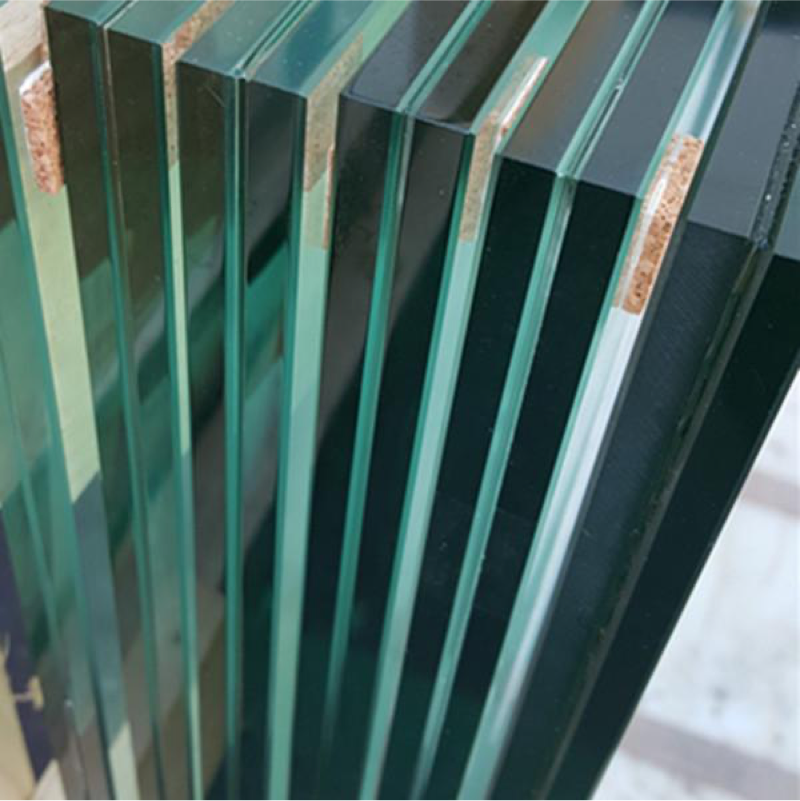
Glass is sold by the square foot or square meter, and larger panels cost more in absolute terms even if the per-unit area price is similar or slightly lower. That said, the relationship between size and price is not perfectly linear. A 610mm × 610mm panel and a 1,200mm × 1,500mm panel might have similar per-square-meter pricing, but the larger panel requires a bigger tempering load (if tempered) and more careful handling during lamination, which can push the processing cost higher.
For projects with many small panels — such as interior partitions with frequent divisions — the cutting yield becomes important. Larger raw glass sheets (typically 3,000mm × 6,000mm or jumbo-size 3,300mm × 6,600mm from large-format float glass producers) yield more usable cuts, reducing waste and keeping per-panel costs down. Manufacturers like Rider Glass with jumbo-format lamination capability can optimize cutting layouts for large residential orders, passing some of that yield advantage to the buyer.
The PVB interlayer is where the most significant quality variation occurs, and this directly affects 1/4 laminated glass price. Basic PVB from lesser-known producers can cost 30–40% less than premium interlayers from brands such as Eastman (Trosifol), Kuraray (SentryGlas), or Sekisui. The price difference reflects differences in moisture resistance, UV stability, adhesion consistency, and acoustic damping performance.
Low-cost interlayers may yellow visibly within five to eight years, particularly in south-facing or UV-exposed applications. Premium interlayers carry 10-year minimum warranties against delamination and discoloration. For residential windows and doors, the difference in interlayer cost is usually a few dollars per square meter — small in absolute terms, but meaningful when considering a 20-year replacement cycle on a facade.
Beyond standard PVB, specialty interlayers carry substantial premiums:
Acoustic PVB: A higher-damping interlayer that improves STC ratings by 3–6 dB over standard PVB. Typically costs 20–40% more than standard PVB laminate.
SGP (SentryGlas Plus): Approximately 2–3× the cost of standard PVB. Justified in structural applications or where post-breakage stiffness is critical, not typically specified in standard 6.4mm residential laminates.
Colored or tinted interlayers: Bronze, gray, green, blue, or black PVB adds 10–25% to the laminate cost depending on the color and supplier.
UV-blocking or low-E interlayers: Specialty options that block specific wavelengths or add thermal performance. Cost varies widely; request specific quotes. For enhanced thermal performance beyond UV blocking alone, manufacturers like Rider Glass also produce low-e glass products that reduce heat transfer through the glazing envelope.
Most 1/4 laminated glass is produced from standard clear float glass. However, the substrate quality can vary. Low-iron (ultra-clear) glass costs approximately 15–30% more than standard clear float and is specified when optical clarity or true color rendering is important — such as in display cases, glass guardrails where minimal green edge tint is desired, or retail storefronts where the glass color impacts the perceived quality of merchandise.
For standard residential windows and doors, standard clear float glass is entirely appropriate and represents the most cost-effective substrate. The key quality differentiator is whether the float glass meets relevant regional standards (EN 572 in Europe, ASTM C1036 in North America, GB 11614 in China), which specify optical distortion, bubble and inclusion limits, and dimensional tolerances.
Single-panel or small-quantity orders carry a disproportionately high per-unit cost because the setup time for cutting, washing, deaerating, and laminating is spread across very few square meters. Most manufacturers establish minimum order quantities (MOQs) for custom laminated orders — often 20–50 square meters — below which a setup surcharge applies.
Volume orders typically unlock lower per-square-meter pricing. A rough industry benchmark is that doubling the order quantity might reduce the effective price by 10–20%, depending on the product complexity and the manufacturer's capacity utilization. For large residential developments or commercial fit-out projects, aggregating orders across multiple openings or units is one of the most effective ways to reduce 6.4mm laminated glass price without compromising quality.
Standard 1/4 laminated glass comes with as-cut edges — the edges are clean from the cutting process but not polished or treated. If the edges will be visible or if the panel is being installed in a glazing system that requires specific edge preparation, additional processing adds cost:
Seamed edges: Lightly ground to remove sharp arrises. Minimal cost addition, typically $1–3 per linear meter.
Polished edges: Ground and polished to a glossy finish. More substantial cost addition, typically $5–15 per linear meter depending on thickness and panel size.
Drilling and cutouts: Holes for hardware (door handles, window hinges) or shaped cutouts require CNC or waterjet processing. Cost varies widely based on hole diameter, count, and complexity.
Silkscreen or ceramic frit: Decorative or privacy coatings applied to one surface before lamination. Adds significant cost ($10–30 per square meter) but enables durable color and pattern integration.
Where the glass is being shipped significantly affects the final delivered cost. Glass is heavy and fragile — a 1,200mm × 2,100mm door panel in 6.4mm laminate weighs approximately 16 kg, and crated shipments add substantial weight for foam and timber protection. Key logistics variables include:
Distance from manufacturer: Longer haulage distances increase freight costs. For projects in North America or Europe sourcing from Chinese manufacturers, ocean freight, port handling, customs clearance, and inland transport add layers of cost.
Packaging specification: Standard crating for ocean freight differs from domestic trucking packaging. Projects importing from China need timber-crated shipments that meet ISPM 15 phytosanitary standards for heat-treated wood packaging.
Lead time: Express production and air freight cost substantially more than standard lead times. Planning orders 6–10 weeks ahead of installation reduces premium shipping exposure.
Currency exchange rates: For international procurement, USD or EUR denominated quotes from Chinese manufacturers fluctuate with exchange rates, which can shift effective prices by 5–10% over the course of a project.
While precise pricing requires a confirmed specification and quantity, the following ranges provide a practical reference for 2024–2025 pricing from Chinese manufacturers exporting to international markets. All figures are indicative and should be validated with current quotes.
Specification | Typical Price Range (USD/m²) | Notes |
|---|---|---|
6.4mm std. clear lam. (annealed), basic PVB | $18–28 | FOB China, 50+m² order |
6.4mm tempered lam., std. clear glass, basic PVB | $25–40 | FOB China, 50+m² order |
6.4mm std. clear lam., acoustic PVB | $30–50 | FOB China, premium interlayer |
6.4mm tinted (bronze/gray) lam., annealed | $22–35 | FOB China, tinted interlayer |
6.4mm low-iron lam., annealed | $28–45 | FOB China, premium substrate |
Add approximately 30–60% to FOB China prices for all-in delivered cost to a North American or European project site, depending on order size, packaging specification, and shipping mode. Domestic sourcing (in-region manufacturing) eliminates international freight but may carry higher base manufacturing costs.
The fastest path to an accurate quote is to provide all relevant details in the first enquiry. At minimum, include: glass dimensions (length × width in mm or inches), quantity (number of panels and total area), interlayer type (standard PVB, acoustic PVB, or specify brand), glass substrate (standard clear, low-iron, or tinted), tempering requirement (annealed or tempered), edge finish (cut, seamed, polished), and any holes or cutouts (with dimensions and positions). A sketch or drawing is worth a thousand words — it eliminates ambiguity and reduces the back-and-forth that delays quotes.
For significant orders — a whole-house window replacement, a multi-unit residential project, or a commercial interior — requesting samples of the actual laminate construction is a worthwhile step. This lets you verify optical clarity, interlayer adhesion quality, edge finish, and thickness against your specification. Most established manufacturers, including Rider Glass, provide small samples (typically 100mm × 100mm or 200mm × 200mm) at no charge or for a nominal fee that is credited against subsequent orders.
When comparing quotes from different suppliers, check that each quote covers the same specification. Differences to verify include: interlayer brand and grade (a quote based on generic PVB versus Eastman Trosifol are not comparable), tempering specification, edge finish included, packaging for shipment, and whether the quoted price is FOB, CIF, or DDP (delivered duty paid). A CIF quote to a port of entry is not the same as a DDP quote delivered to your project site — the difference can be 15–25% of the product price in international shipments.
Glass orders typically include a breakage/waste allowance of 2–5% depending on the fragility of the sizes ordered and the shipping mode. Confirm whether the quoted price and quantity are based on net usable panels or on raw cutting sheets that include waste. For small quantity orders with complex cutting patterns, the waste allowance can add 5–10% to the effective cost per usable panel.
For standard residential window and door replacements, 6.4mm laminated glass is the most commonly specified safety glass. To optimize cost: use annealed rather than tempered unless code requires otherwise; stick with standard clear glass unless low-iron is needed for aesthetics; select standard PVB unless acoustic performance is a documented requirement; and avoid unnecessary edge polishing for concealed framing applications.
In commercial interiors, 6.4mm laminated glass is frequently used for office partitions, meeting room walls, and elevator lobby infills. For these applications, consider whether the laminate needs to be tempered (required by code in many jurisdictions for large panels above a certain height or near doors) and whether a colored or frosted interlayer could eliminate the need for separate applied film, simplifying the specification and reducing long-term maintenance.
Glass tabletops, shelves, and display cases often use 6.4mm laminate for the safety benefit — when broken, the interlayer prevents fragmentation and reduces injury risk. For furniture applications, edge polishing is usually desirable for both aesthetic and tactile reasons. Budget accordingly: polished edges on 6.4mm laminate add $5–15 per linear meter, which on a 1,200mm × 800mm tabletop with four polished edges represents an additional $50–120 in processing cost — meaningful on a $150–250 glass panel.
Rider Glass is positioned differently from typical commodity laminated glass suppliers. The company operates large-format tempering and lamination lines that produce 6.4mm laminated glass efficiently at volumes that support competitive pricing for both small residential orders and large commercial projects.
One practical advantage is the ability to cut 6.4mm panels from jumbo-size float glass sheets (up to 3,300mm × 6,600mm), which improves cutting yield on orders with multiple sizes and reduces waste. Competitor A, with smaller cutting lines, may need to cut from standard 2,440mm × 3,660mm sheets, which produces more leftover scrap on complex orders.
Another advantage is interlayer sourcing. Rider Glass stocks both standard and acoustic-grade PVB from established international suppliers, enabling consistent quality across orders without the lead time that custom interlayer procurement would require. Competitor B may source interlayers from multiple Asian suppliers to reduce cost, introducing variability in optical clarity and long-term durability that becomes apparent only after installation.
For projects importing from China, Rider Glass provides full export documentation packages — certificates of origin, quality reports, packing lists, and bills of lading — that reduce customs clearance friction. This matters because delays at the port translate directly into site delays and carrying costs that are not visible in a quoted per-square-meter price.
A: Yes. One quarter of an inch equals 6.35mm, which is rounded to 6.4mm in industry practice. Both terms refer to the same standard laminated glass construction (3mm + 0.4mm PVB + 3mm glass). You will see both search terms used by buyers and suppliers interchangeably, so quotes for one should be equivalent to quotes for the other when the rest of the specification is identical.
A: Indicative pricing for standard 6.4mm annealed laminated glass with basic PVB ranges from $18–28 USD per square meter FOB China for orders of 50+ square meters. Tempered versions typically run $25–40 per square meter. Specialty interlayers (acoustic, tinted, UV-blocking) add premiums of 20–50%. Delivered cost to North America or Europe adds approximately 30–60% to FOB pricing depending on shipping mode and order size.
A: For most residential orders, the three biggest cost drivers are: quantity (small orders carry disproportionate setup costs), interlayer type (premium PVB brands cost significantly more than generic), and whether tempering is required (tempered laminate costs 30–50% more than annealed equivalent). For international shipments, logistics and packaging can add 20–40% to the factory gate price.
A: Yes, 6.4mm laminated glass is commonly used in residential entry door sidelites and transom windows. However, if the door glass is within 24 inches of the bottom edge (US building codes) or in other hazard locations specified by local code, tempered or laminated glass may be specifically required. Verify with your local building department before ordering. For full door panel glazing, thicker laminates like 8.8mm or 11.5mm are more commonly specified to provide adequate stiffness and security.
A: Optimize panel sizes to match standard cutting layouts from jumbo glass sheets, reducing waste. Aggregate orders across multiple units or openings to hit higher volume thresholds. Avoid tempering unless required by code. Use standard clear glass rather than low-iron unless aesthetics demand it. Specify standard PVB unless acoustic performance is documented as a requirement. Plan orders 6–10 weeks ahead to avoid premium express production and air freight costs.
A: Acoustic PVB is a higher-damping interlayer formulation that reduces sound transmission through the laminate by approximately 3–6 dB compared with standard PVB. A 6.4mm laminate with acoustic PVB typically achieves STC 36–38 dB versus STC 33–35 dB for standard PVB. It is worth the premium (typically 20–40% more) if the installation is in a high-noise environment — near airports, railways, or busy streets — and where a meaningful acoustic improvement is needed without switching to a thicker glass type.
A: Yes. Standard PVB interlayers block more than 99% of UV radiation in the 300–380nm range. This provides meaningful protection for interior furnishings, artwork, and fabrics from sun fading. It also provides skin protection for occupants. If UV blocking is a critical performance requirement, confirm with the supplier that the specific PVB grade being used meets the UV transmission specification you require.
Understanding 1/4 laminated glass price requires looking beyond the per-square-meter quote to the full specification and supply chain picture. Interlayer grade, tempering requirements, substrate quality, surface treatments, order quantity, and logistics all contribute to the final cost per usable panel installed.
The most effective strategy for getting the best value is to specify precisely what the project needs — no more, no less — and to request quotes that cover identical specifications from multiple suppliers. For residential window and door applications, standard clear 6.4mm annealed laminate with quality PVB delivers safety and UV protection at a reasonable cost. For projects with acoustic or aesthetic requirements beyond the standard, specialty interlayers and substrates are available at proportionate premiums. Where code mandates heat-treated plies, Rider Glass's tempered glass options provide the full range of 6.4mm tempered laminate configurations at competitive export pricing.


